

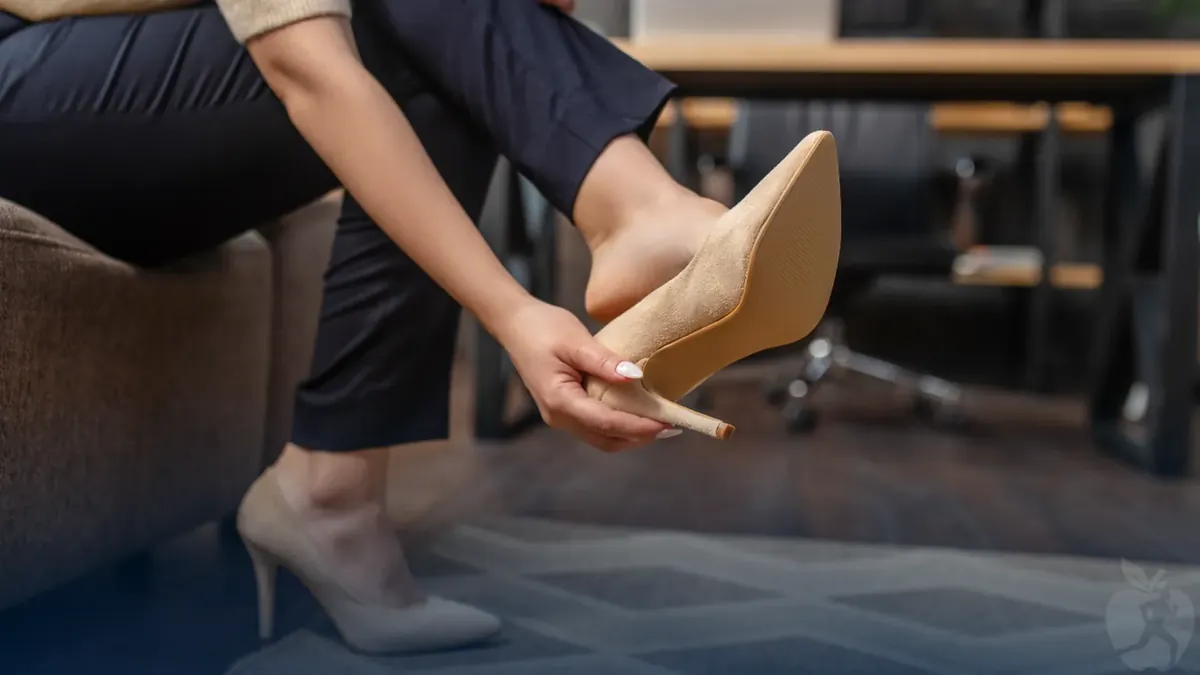
If you’ve been wondering why your heels hurt in the morning, the answer often starts with what your foot does while you sleep. You may feel fine lying down, then get a sharp pull under the heel as soon as your feet touch the floor. After a few minutes, it may ease enough to walk more normally.
That pattern can be easy to dismiss at first. Still, when it keeps coming back, it can affect your pace, your workouts, your workday, and the way you move through simple routines.
At Core Medical Center, we help patients look at heel, arch, and lower-leg symptoms with a clear plan. Good foot and ankle pain treatment looks at how the heel, arch, calf, and ankle work together, since focusing only on the sore spot can miss the reason pressure keeps returning to the same area.
Why Do Heels Hurt With the First Steps?
Heels often hurt with your first morning steps because of plantar fasciitis, an irritation of the thick band of tissue that supports your arch. While you sleep, your foot rests in a relaxed position and that tissue tightens. Standing up stretches it all at once, so the bottom of the heel pulls or stabs until the tissue warms up.
The plantar fascia helps absorb pressure during walking. If the area is already irritated, that sudden stretch may feel sharp, burning, or deeply sore.
This is one reason foot pain in the morning often improves after moving around. The tissue warms up, circulation increases, and the first intense pull may soften. Mayo Clinic describes plantar fasciitis as one of the most common causes of heel pain, with pain that tends to return after standing for a long time or getting up from a chair.
When Plantar Fasciitis Is the Likely Cause
Plantar fasciitis is one of the most common reasons people ask why heels hurt in the morning. It usually develops when the tissue under the foot becomes irritated from repeated strain.
That strain may come from long hours standing, worn shoes, tight calves, a sudden increase in walking, or changes in how your foot hits the ground. Sometimes the problem starts after a new fitness routine. Other times, it builds slowly until those first steps become hard to ignore.
The discomfort often sits near the bottom of the heel. Some people feel a stabbing sensation. Others describe pulling through the arch or soreness that comes back after activity.
Why It Can Keep Returning
Once the plantar fascia becomes sensitive, the body may adjust without you realizing it. You may shorten your stride, avoid pressure on one side, or roll the foot differently.
Those small changes can affect the ankle, knee, hip, or lower back. Over time, the original irritation can turn into a wider movement problem. That’s why plantar fasciitis often needs more than a few stretches: the tissue may need support, and the mechanics around it may need attention too.
Other Reasons the Heel May Hurt
Morning symptoms can point toward plantar fascia irritation, but that isn’t the only possible cause. Some people feel soreness directly under the heel. Others notice tightness behind it near the Achilles tendon, stiffness through the ankle, or tenderness along the outside of the foot.
Possible contributors include:
- Achilles tendon irritation
- Heel pad sensitivity
- Heel spurs, although most people with a spur have no heel pain at all
- Flat feet or high arches
- Poor shoe support
- Calf tightness
- Nerve irritation
- Past sprains or overuse injuries
The American Academy of Orthopaedic Surgeons notes that heel spurs are not the cause of plantar fasciitis, so the pain can be treated without removing the spur. This is why an evaluation should consider the whole lower leg, not just the area that hurts first.
What Your Daily Routine May Be Adding
Symptoms rarely happen in isolation. The way you stand, walk, drive, work, and exercise can all influence how irritated the tissue becomes.
A workday on hard floors can add stress. So can shoes with poor support, a sudden jump in daily steps, or a long day of yard work that asks more from the foot than it’s used to handling.
Why Heel Pain Comes Back After Sitting
People with foot pain in the morning often notice the same pull after lunch, after a long commute, or after hours at a desk. The tissue stiffens during rest and reacts once movement begins again.
Mayo Clinic lists long periods of desk sitting, along with long hours standing on hard surfaces, among the factors that raise the risk of plantar fasciitis.
What Helps Morning Heel Pain at Home?
Stretching the calf and the bottom of the foot before you stand, wearing supportive shoes on hard floors, and easing back from a sudden jump in walking or running all help morning heel pain. These steps lower the strain on the plantar fascia during the first steps of the day.
A few simple habits to try:
- Stretch before you stand. Pull your toes gently back toward you, hold for about 10 seconds, and repeat. AAOS recommends calf and plantar fascia stretching and suggests the toe stretch first thing in the morning, before standing or walking.
- Keep shoes by the bed. Supportive shoes or sandals take pressure off the heel on tile and hardwood floors, where bare feet get little help.
- Ease back on sudden increases. If your heel flared after more steps, miles, or a new class, scale back and build up again gradually.
- Use the right shoe for the activity. Running shoes are made for running, so pick court shoes for court sports.
Home care helps many people. If your first steps still hurt after a couple of weeks, it’s time for a closer look.
Will Plantar Fasciitis Go Away by Itself?
Plantar fasciitis often improves with conservative care, though it can take months. AAOS reports that more than 90% of patients improve within 10 months of starting simple treatment methods. A structured plan aims to shorten that stretch and keep the problem from coming back.
Ten months is a long time to plan your mornings around your heel. The physical therapy clinical practice guideline for heel pain, updated in 2023, supports manual therapy, calf and plantar fascia stretching, and strengthening exercise for the foot and ankle muscles.
Those are the core of physical therapy for heel and arch pain: hands-on work to free up tight joints and tissue, stretching you can do at home, and a progression that rebuilds strength through the foot, ankle, and calf.
How Heel and Ankle Symptoms Connect
Each foot has 26 bones, 33 joints, and more than 100 tendons, muscles, and ligaments, according to MedlinePlus. The heel, arch, ankle, calf, and toes work as one chain. When one area becomes stiff or weak, another area often takes on more pressure.
Limited ankle motion can change how the foot lands. Tight calf muscles can increase pull on the heel. Weak support through the arch can make the plantar fascia work harder with every step.
A focused exam should help answer practical questions:
- Is the plantar fascia irritated?
- Is the ankle moving well?
- Are the calves too tight?
- Are your shoes helping or adding stress?
- Has your walking pattern changed because you’re avoiding pressure?
What an Evaluation May Include
A useful visit should give you clearer information, not a rushed explanation. We may review when symptoms started, what your first steps feel like, how long discomfort lasts, and whether activity makes it better or worse.
At Core Medical Center, we may also look at range of motion, tenderness, strength, footwear, walking mechanics, and how the lower leg responds to movement. When the exam raises questions, your provider may recommend further testing.
Foot and ankle care here is coordinated by lead physical therapist Matt Elniff, PT, MPT, FAAOMPT, who has advanced training in orthopedic manual therapy, and physical therapist Monica Cass, RPT.
Care may include physical therapy, chiropractic services, pain management, injury rehabilitation, or a coordinated plan that supports movement from the foot through the lower leg. You can meet our physical therapy team in Blue Springs before your first visit.
When It’s Time to Get Checked
A little soreness after a long day may settle with rest. Ongoing heel pain deserves more attention, especially when you’re limping, avoiding exercise, or changing how you walk.
It’s smart to schedule an evaluation if symptoms last more than a couple of weeks, keep returning, or affect normal activity. Ankle pain with swelling, weakness, instability, or pain after an injury should be checked sooner.
Get checked promptly if heel pain follows an injury, comes with numbness, tingling, swelling, bruising or fever, hurts at night or at rest, or keeps you from putting weight on the foot.
Waiting too long can make the body adapt around the discomfort. Those changes may feel small at first, but they can affect balance, posture, and confidence with movement.
Local Care in Blue Springs and Overland Park
Life around the Kansas City metro can add up quickly on your feet. A patient dealing with foot pain in Overland Park may move from office hours near College Boulevard to errands along Metcalf Avenue, then spend the evening walking through the neighborhood.
Our Overland Park office at 10520 Barkley, Suite 120, Overland Park, KS 66212 is convenient for patients near I-435, Nall Avenue, Roe Avenue, and nearby Johnson County communities.
On the Missouri side, our Blue Springs office at 1131 W. Main Street, Suite C, Blue Springs, MO 64015 serves patients near Adams Dairy Parkway, Grain Valley, Lake Tapawingo, and eastern Jackson County.
When each step feels uncomfortable, a nearby office makes it easier to stay consistent with care and get evaluated before the problem starts affecting more of the body.
Getting Answers About Why Heels Hurt in the Morning
Understanding why heels hurt in the morning can help you recognize when the problem may need more than new shoes or a few stretches. Tissue irritation, calf tightness, poor support, movement changes, and plantar fasciitis can all play a role.
At Core Medical Center, we help patients review what may be causing their symptoms and what type of care may fit their daily routine. Learn more about plantar fasciitis and other heel conditions we treat, or schedule an appointment if your first steps have become something you plan around.
Frequently Asked Questions
How do you treat morning heel pain?
Most morning heel pain is treated with conservative care: stretching the calf and plantar fascia, supportive shoes, easing back on sudden activity increases, and physical therapy that adds hands-on work and strengthening. Your provider sets the plan after examining your foot, ankle, calf, and walking pattern.
Why does only one heel hurt in the morning?
Plantar fasciitis often starts in one foot. The side that hurts may carry more load from a past sprain, a tighter calf, a different arch shape, or the way you stand and walk. Once one heel is sore, people tend to shift weight away from it, which loads the other foot, knee, and hip.
Will plantar fasciitis go away on its own?
Many cases settle with simple care, though recovery often takes months. Heel pain tends to linger when the strain behind it continues, such as long shifts on hard floors, worn shoes, or tight calves. Dealing with those factors early gives the tissue a better chance to calm down.
What is a red flag for heel pain?
Heel pain that follows an injury, comes with numbness, tingling, swelling, bruising or fever, hurts at night or at rest, or keeps you from bearing weight should be checked promptly. These signs can point to something other than plantar fasciitis, such as a fracture, nerve problem, or infection.
When should I see someone for heel pain in Blue Springs or Overland Park?
Schedule an evaluation if your heel pain lasts more than a couple of weeks, keeps returning, or changes how you walk. Our Blue Springs office on W. Main Street and our Overland Park office on Barkley both see patients with heel, arch, and ankle pain. You can call (816) 229-1941 in Blue Springs or (913) 386-5581 in Overland Park.