
Keeping your workforce healthy and compliant can feel like a moving target. Regulations change, deadlines sneak up, and a new hire’s start date often waits on one more step: the pre-employment physical.
Both sides of that exam have questions. A job candidate wants to know what happens at the visit and how to prepare. An employer in Blue Springs, Overland Park or across the Kansas City metro wants two answers: how the exam differs from a DOT physical, and where the legal lines sit.
What Is a Pre-Employment Physical?
A pre-employment physical is a medical exam that an employer may require after making a conditional job offer. It checks whether the new hire can safely perform the essential functions of the job. The exam usually covers health history, vital signs, vision and hearing, and any job-specific checks the employer requests.
This approach protects both the employee and the employer by identifying potential health concerns early. A new hire learns about a problem before it becomes an injury on the job. The employer gets a record that the exam was done the same way for everyone in the role.
Commercial drivers have a separate, federally defined exam. If your workforce includes CDL holders, our DOT physicals and occupational medicine service covers the federal driver exam along with the pre-employment, injury and return-to-work care around it.
What a Pre-Employment Physical Includes
Your provider reviews the physical demands of the position and conducts an exam tailored to those requirements. The employer’s job description sets the scope, so two candidates at the same clinic can have different visits. A typical exam includes:
- Health history. Past injuries, surgeries, current medications and any ongoing conditions.
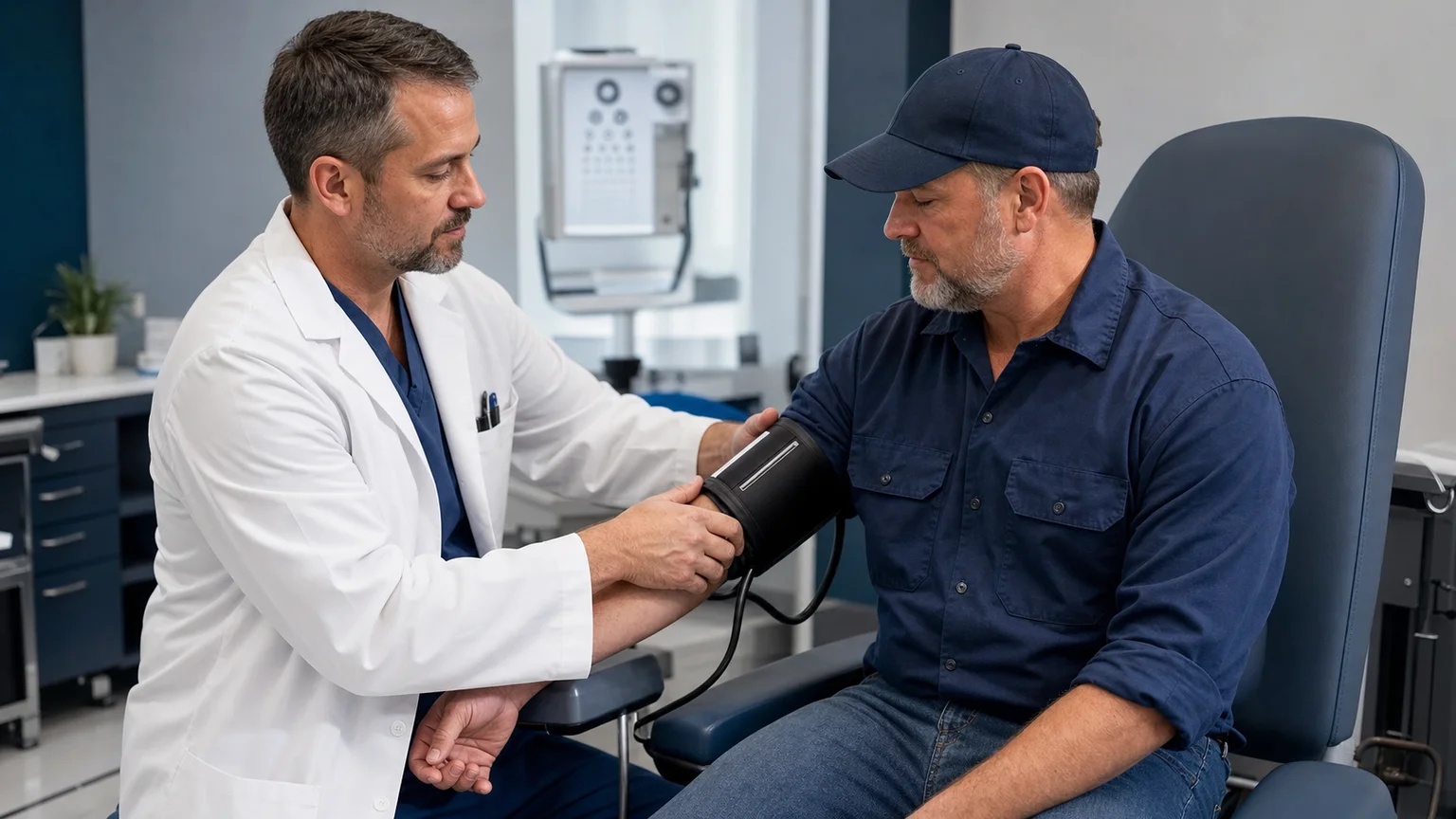
- Vital signs. Blood pressure, pulse, height and weight.
- Vision and hearing. Basic screening, with your glasses, contacts or hearing aids if you use them.
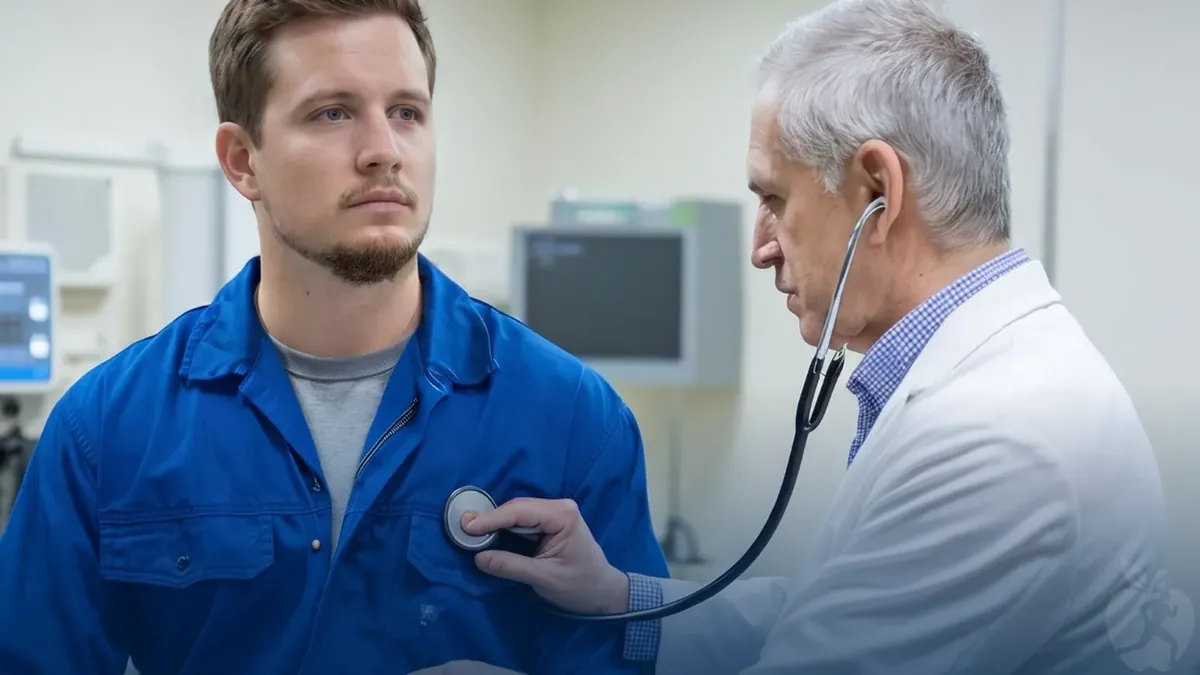
- A physical exam. Heart, lungs, spine, joints and general mobility.
- Job-specific physical checks when the employer requests them. A closer look at the lifting, carrying, bending or standing the job description lists.
Some jobs add separate tests. Drug screening, lift or strength testing and other specialized evaluations depend on the employer’s policy and the role. Our team coordinates that testing with the employer, so the candidate knows what has been ordered before the visit.
Certain roles also fall under OSHA medical screening and surveillance requirements, which set their own health history and exam steps for specific workplace exposures. The employer is responsible for telling the clinic when a role carries one of these requirements.
How to Prepare for the Visit
A little preparation keeps the exam to a single visit. Bring:
- A photo ID and any form or authorization the employer gave you
- A list of current medications and the providers who prescribe them
- Your glasses, contacts or hearing aids
- Recent records for any managed condition, such as blood pressure readings or diabetes results
Pre-Employment Physical vs. DOT Physical
A pre-employment physical is set by the employer and measured against the duties of one job. A DOT physical is set by federal rules for commercial drivers and measured against FMCSA medical standards. Some CDL jobs call for both exams, so ask the employer which one your offer requires.
DOT physical examinations are required for commercial drivers to confirm they meet the physical and medical standards set by the Department of Transportation. These exams cover vision, hearing, blood pressure and overall physical condition. Certification typically lasts up to two years, though certain health conditions may require more frequent monitoring.
| Pre-Employment Physical | DOT Physical | |
|---|---|---|
| Who requires it | The employer, for its own job requirements | Federal FMCSA rules for commercial drivers |
| Standard used | The essential functions of the specific job | Federal medical standards for driving safety |
| Who performs it | A licensed clinician the employer selects | A medical examiner listed on the FMCSA National Registry |
| Result | A report to the employer on fitness for the job | A Medical Examiner’s Certificate when you qualify |
| How long it lasts | Set by the employer’s policy | Up to 24 months |
At Core Medical Center, DOT exams are performed by Dr. Aston Goldsworthy, a certified medical examiner listed on the National Registry. If you are budgeting for driver exams, see what a DOT physical costs and why the cheapest exam can cost more.
Fitness-for-Duty Exams for Current Employees
A fitness-for-duty exam checks whether a current employee can safely do the job, usually after an injury, an illness or a leave. Under the ADA, an employer can require one only when the exam is job-related and consistent with business necessity.
Fitness for duty exams serve a similar purpose to pre-employment screenings for employees returning from injury or leave. The provider compares the employee’s current condition with the demands of the role.
The result may be a full release, a release with temporary work restrictions, or a plan for more care before the employee returns. Clear restrictions give the supervisor something specific to schedule around.
Can You Fail a Pre-Employment Physical?
Not in the pass-or-fail sense most people picture. The exam reports whether you can safely perform the essential functions of the job, with or without restrictions or accommodation. An employer that withdraws an offer after the exam must be able to show the reason is job-related and consistent with business necessity.
ADA rule for employers: Under the ADA, an employer may require a medical exam only after a conditional job offer, and every new hire in that job category must get the same exam, per EEOC guidance on pre-employment medical exams.
A finding such as high blood pressure or an old back injury does not end the process by itself. The next step may be records from your own provider, a recheck, or a talk with the employer about accommodation. If a finding needs treatment, our medical team can evaluate it in the same building.
Workplace Injury Care and Return to Work
Workplace injury care addresses injuries that occur on the job, from minor strains to more significant incidents that require ongoing treatment. A provider evaluates the injury, develops a treatment plan and coordinates with employers to establish appropriate work restrictions during recovery.
Modified duty while healing can support both the worker’s recovery and the employer’s staffing needs. Ongoing follow-up visits track progress and adjust the plan as needed. Injury care is one part of our occupational health and employer services, which also cover workers’ compensation and federal OWCP claims.
How Employers Use Pre-Employment Exams
If your business employs commercial drivers, operates in a physically demanding industry, or wants to reduce the risk and cost of workplace injuries, these exams belong in your hiring process. Transportation companies, construction firms, manufacturing operations and other employers with strict safety requirements use them to match each hire to the work.
Before scheduling exams or building a workplace health program, your provider at Core Medical Center will review your industry requirements and workforce needs with you. They will assess which certifications and screenings apply to your employees and help you build a consistent, compliant process.
That process can include pre-employment and fit-for-duty exams for employers, drug and alcohol screening coordination, and functional capacity and ergonomic guidance. Some industries have unique regulatory requirements, and certain roles may call for more specialized evaluations.
Schedule a Pre-Employment Physical in Blue Springs or Overland Park
Whether it is a DOT physical, a pre-employment screening or workplace injury care, these services help keep your employees safe and your operations compliant. The exam is simpler for everyone when the candidate arrives prepared and the employer has spelled out the job’s demands.
If keeping up with workplace health requirements has been a challenge, schedule an appointment at our Blue Springs clinic, 1131 W. Main Street, Suite C, at (816) 229-1941, or our Overland Park clinic, 10520 Barkley, Suite 120, at (913) 386-5581.
Frequently Asked Questions
What Does a Pre-Employment Physical Consist Of?
Most visits include a health history review, vital signs, vision and hearing screening, and a physical exam of the heart, lungs, spine and joints. The employer can add job-specific checks tied to the duties of the role. Separate tests, such as a drug screen, are added only when the employer orders them.
Is a Drug Test Part of a Pre-Employment Physical?
Only when the employer orders one. A drug screen is a separate test from the physical exam. For safety-sensitive transportation jobs, the testing rules come from the U.S. Department of Transportation’s Office of Drug and Alcohol Policy and Compliance. Core Medical Center coordinates drug and alcohol screening with the employer.
How Long Does a Pre-Employment Physical Take?
The length depends on what the employer orders. A basic exam is a single visit, and added tests such as a drug screen or job-specific checks take more time. Ask what has been ordered when you book, and bring your paperwork so the exam can be finished in one trip.
Who Pays for a Pre-Employment Physical?
Ask the employer before you book. Employers that require the exam often arrange it and cover the cost, though policies vary. Employers who send new hires to Core Medical Center can ask the front desk about billing and scheduling, and anyone can call the clinic for the current exam price.
How Is a Pre-Employment Physical Different From a DOT Physical?
A pre-employment physical follows the employer’s requirements for one job. A DOT physical follows federal FMCSA standards for commercial drivers, must be done by a medical examiner on the National Registry, and can certify a driver for up to 24 months. Some CDL jobs require both, so confirm with the employer.