

A headache after a car accident often seems manageable at first. It may show up the evening of the crash, fade after rest and a dark room, then return the next week a little stronger. Over time the pattern gets harder to dismiss, especially once it interferes with work, sleep or simple daily tasks.
Many people have already tried over-the-counter medicine, rest and ice on their own. Some already have imaging that shows no clear structural cause. What they want is a thorough evaluation that sorts out whether the problem is the neck, the muscles, a concussion or a mix of all three. That evaluation is where our headache relief program starts.
Why Do Headaches Start After a Car Accident?
Headaches after a car accident usually come from one of three sources. Whiplash can strain the joints, muscles and ligaments of the neck. A blow or jolt to the head can cause a concussion. The muscles around the neck and shoulders can also tighten and guard after the impact, which keeps head pain going.
These sources often overlap. A rear-end collision can snap the head forward and back, straining the neck while also jarring the brain. Headaches that begin at the base of the skull are a common symptom of whiplash-related neck injuries.
Work injuries follow a similar path. A fall, a lift that wrenches the neck, or a blow from equipment can set off the same mix of neck strain, muscle guarding and concussion symptoms.
Warning Signs That Need Emergency Care Now
Some headaches after a crash or fall are emergencies. The National Institute of Neurological Disorders and Stroke lists a headache after a brain injury among the headaches that need prompt medical attention.
Call 911 or go to the ER now if a headache after a crash or fall keeps getting worse or comes with repeated vomiting, confusion, slurred speech, weakness, unequal pupils, a seizure or passing out, all CDC concussion danger signs.
If none of those signs are present, you still deserve a proper evaluation. A headache that lingers, keeps coming back or changes after an injury is worth checking in the days and weeks that follow.
Can a Headache Show Up Days Later?
Yes. A headache does not always start at the scene. The international headache classification counts a headache as attributed to trauma to the head or neck when it develops within 7 days of the injury. It calls the headache acute for the first 3 months and persistent if it lasts longer.
A delay has a simple explanation. Neck pain and stiffness after a crash often build over the next few days, and the headache can build with them. Whiplash and other soft-tissue symptoms often surface a day or two after the impact.
Write down the day your headache started, even if it seems minor. That date matters for your care, and it matters for your claim.
When Your Neck Is the Source (Cervicogenic Headache)
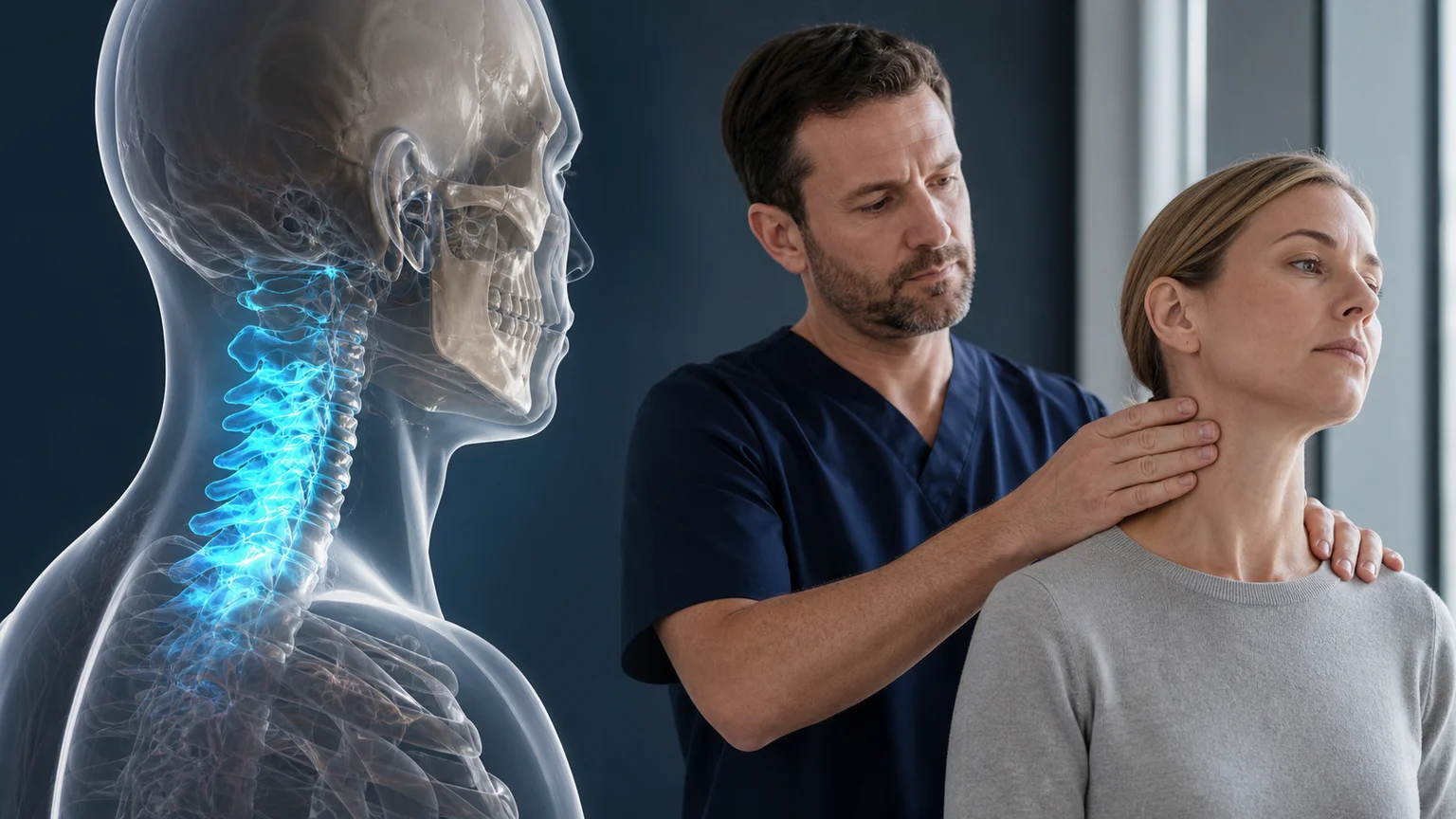
The joints and muscles of the neck play a large role in many headaches after an injury. Headache specialists call this pattern a cervicogenic headache, a headache caused by a problem in the cervical spine. It usually comes with neck pain, reduced neck motion and a headache that gets worse with certain neck movements.
How It Feels
When the cervical spine loses its normal range of motion, symptoms can show up as a dull ache at the base of the skull. Some patients feel tightness that radiates into the temples. Others notice that pain worsens with certain neck positions, after long periods at a desk or after sleeping in an awkward position.
Why It Keeps Coming Back
Over time, the body tries to protect the neck by changing posture and the way surrounding muscles fire. Forward head posture, shoulder tension and jaw clenching are common results. These compensation patterns can keep symptoms active long after the first injury has calmed down, which is why treating the pain alone often falls short.
Did your headaches start before the accident? Our guides to common causes of daily headaches and telling a migraine from a tension headache can help you sort out the pattern.
Why Some Post-Injury Headaches Linger
Pain is not purely a structural event. The brain combines signals from the neck and shoulders with information about stress, sleep, prior injuries and overall conditioning. When neck strain, poor sleep and stress stay high for weeks, pain signals can stay turned up and the muscles around the neck can stay guarded.
This helps explain why two people in the same crash can report very different levels of pain. It is also why a good plan looks beyond the head itself and checks the whole cervical spine, the shoulders and the nervous system.
Headaches After a Work Injury
Work injuries add a second layer: the claim. We treat workers with Missouri and Kansas workers’ compensation claims. We also treat federal employees covered by the Federal Employees’ Compensation Act. Under that law, the Department of Labor’s OWCP pays medical expenses for federal workers hurt on the job.
Washington State L&I patients who now live in the Kansas City area can continue approved care with us while their claims stay active. Jobs with long hours at a computer, repetitive overhead work or long drives between sites can add neck and shoulder strain on top of the injury itself.
What to Record for an Injury Claim
Claims for car accidents, personal injury, workers’ compensation and OWCP all depend on records. Your care team’s notes connect the injury event to the symptoms that followed and track how they change over time.
Three facts help most at your first visit: the date and details of the injury, the day the headache started, and anything you have already tried. Bring any imaging, ER or urgent care records you have. We document your exam and progress for your claim, and your adjuster, employer or attorney handles the legal side.
How Our Team Treats Post-Injury Headaches
Our program combines several kinds of care. Your plan may include medical pain management, chiropractic care, physical therapy and, when appropriate, injection procedures to calm pain-generating nerves and muscles. The aim is fewer and milder headache days, with a plan that changes as you respond.
Dr. Paul Doskey, MD, a board-certified anesthesiologist focused on pain management, leads the medical side of complex and chronic headache cases. When your neck or spine is involved, Dr. Devyn Chapman, DC, and our chiropractic team treat it in the same building.
If your headaches began after a concussion, your provider can connect your plan to our concussion care so the two are managed together.
This team approach lets us manage straightforward cases conservatively and spot patients who may need more advanced care. It is part of our wider non-surgical pain care in Blue Springs and Overland Park.
Headache Care in Blue Springs and Overland Park
We see patients across Kansas and Missouri at two offices. Our Blue Springs clinic is at 1131 W. Main Street, Suite C, Blue Springs, MO 64015, phone (816) 229-1941. Our Overland Park clinic is at 10520 Barkley, Suite 120, Overland Park, KS 66212, phone (913) 386-5581.
Both offices make it easier for people who travel between home, work and medical appointments across the Kansas City metro.
Understanding Your Headaches and Choosing a Clear Path Forward
Once you understand what is driving your headaches, it is easier to choose the right next step. A headache after a crash or work injury may come from neck strain, muscle guarding, a concussion or a mix of them. That clarity matters even more when you have an active claim that needs both treatment and clear records.
If headaches have been limiting your ability to work, drive or sleep since your injury, a focused assessment can help you find realistic next steps grounded in clinical evidence. Schedule a visit to learn how our coordinated care for post-injury headaches can work toward fewer and milder headache days.
Frequently Asked Questions
How Long Should a Headache Last After a Car Accident?
There is no fixed timeline. Under the international headache classification, a post-traumatic headache counts as acute for the first 3 months and persistent if it lasts longer. If your headache is not improving, keeps coming back or changes in pattern, get it evaluated.
When Should I Worry About a Headache After a Crash?
Go to the emergency room right away if the headache keeps getting worse or comes with repeated vomiting, confusion, slurred speech, weakness, numbness, unequal pupils, a seizure or passing out. Those are CDC concussion danger signs. A milder headache that lingers still deserves a clinic visit so the cause can be found.
Can Whiplash Cause Headaches?
Yes. Whiplash strains the joints, muscles and ligaments of the neck, and that strain can cause headaches that start at the base of the skull and spread toward the temples. The headache may begin hours or days after the crash, as neck stiffness builds.
Are Work-Injury Headaches Covered by Workers’ Comp in Missouri and Kansas?
Coverage decisions belong to your employer’s insurer and the state workers’ compensation system, not to the clinic. Report the injury to your employer and ask your adjuster what care is authorized. Our team treats workers’ compensation patients and documents how the headache connects to the injury.
Do You See Federal Workers With OWCP Claims for Headaches?
Yes. We treat federal employees with OWCP claims under the Federal Employees’ Compensation Act at our Blue Springs and Overland Park offices. Our team handles the medical documentation your claim needs while your headache care moves forward.