

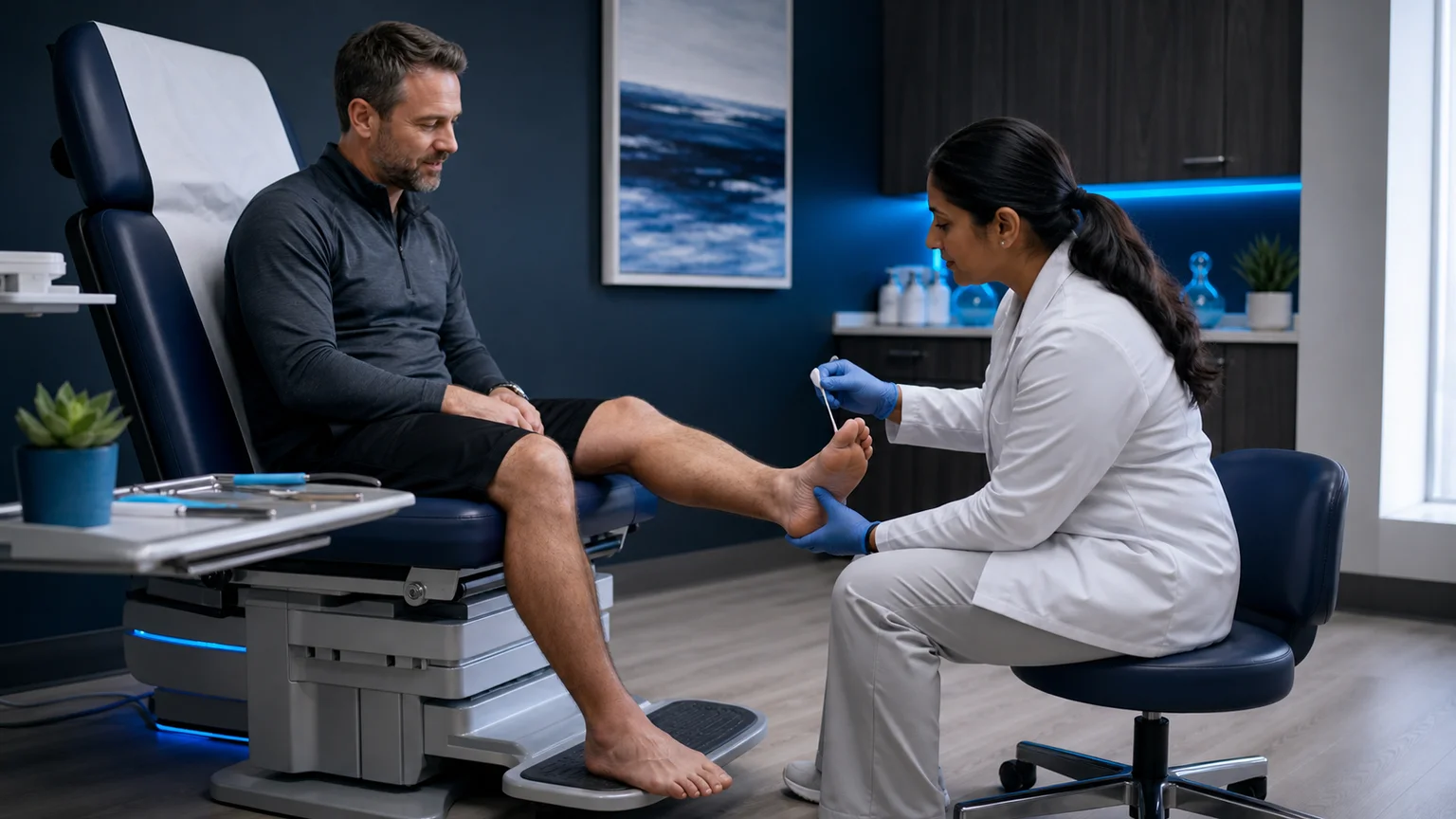
Nerve pain feels like electric shocks, burning, or tingling because the problem lives in the wiring itself, not in the tissue around it. Nerves carry information as electrical impulses, and when a nerve is damaged, compressed, or inflamed, it starts firing on its own. Your brain has no way to know those signals are false, so it reads them as zaps, heat, or pins and needles. That is why nerve pain feels nothing like a bruise, a pulled muscle, or an aching joint.
Nerve Pain and Tissue Pain Use Different Alarm Systems
Most pain is tissue pain. You sprain an ankle, sensors in the ankle detect real damage, and healthy nerves carry an accurate report to your brain. The system works the way it was designed to. The pain is dull, achy, or throbbing, and it fades as the tissue heals.
Neuropathic pain is different. The reporting system itself is broken, so the nerve sends pain signals with no new injury behind them. That one difference explains most of what people notice:
- Tissue pain aches. Nerve pain zaps, burns, and prickles.
- Tissue pain stays near the injury. Nerve pain shoots along the path of the nerve.
- Tissue pain eases with rest. Nerve pain can flare at random, even in bed at night.
If your symptoms fit the second column, your nerves deserve a closer look.
Why Damaged Nerves Misfire
A healthy nerve works like an insulated cable. It fires only when a real signal comes through. Damage changes that in three ways.
- Lost insulation. Many nerve fibers are wrapped in a protective coating called myelin. When disease or compression strips it away, signals leak and jump between fibers, like bare wires touching.
- Hyperexcitability. Injured fibers become trigger happy. They fire spontaneously, or they respond to light touch as if it were a burn.
- Mislabeled location. Your brain maps every signal to the territory that nerve serves. A compressed nerve in your low back can produce pain in your foot, because the foot is the region that nerve reports on.
The character of the sensation follows the type of misfire. Sudden, synchronized bursts feel like electric shocks or shooting nerve pain. A steady stream of low-level misfires from the smallest fibers feels like burning. Partial, garbled signals feel like numbness and tingling, the pins and needles so many patients describe.
Common Causes of Pain That Feels Like Electric Shocks
Three patterns account for most of the nerve pain we see in clinic.
Peripheral neuropathy. This is damage to the long nerves that serve the feet, legs, and hands. Peripheral neuropathy usually begins with burning or tingling in the toes and moves upward over time. Diabetes is a leading driver, and diabetic nerve damage tends to progress quietly for years before it demands attention. Chemotherapy, low vitamin B12, thyroid disease, and heavy alcohol use can contribute as well.
Radiculopathy. This is a compressed nerve root at the spine, often from a herniated disc or a narrowed spinal canal. Sciatica is the classic example: shock-like pain that shoots from the low back down one leg. The same problem in the neck sends shooting pain down the arm.
Nerve entrapment. Here a nerve gets squeezed somewhere along its route through muscle, bone, or ligament. Carpal tunnel syndrome at the wrist is the most familiar version, with tingling and shocks in the thumb and first fingers, often worse at night.
Shingles, past injuries, and other peripheral nerve disorders can produce the same shocks and burning. That is why an accurate diagnosis matters more than matching your symptoms to a list.
When Nerve Pain Needs a Medical Evaluation
Occasional pins and needles after sitting cross-legged is normal circulation and pressure at work. The symptoms below are not, and each one is a reason to be evaluated:
- Shocks, burning, or tingling that keeps returning for more than a week or two
- Numbness that spreads or never fully clears
- Weakness, such as a foot that slaps the floor or a grip that fails
- Any nerve symptoms in your feet if you have diabetes or prediabetes
- Shooting pain after a car accident, fall, or work injury
- Pain that wakes you at night or changes how you walk
Two situations call for emergency care rather than an appointment: sudden loss of bowel or bladder control with back pain, and sudden weakness or numbness on one side of the body. For everything else, sooner is better. A pinched nerve that stays compressed for months is harder to calm down than one treated early.
How an Integrated Clinic Approaches Nerve Pain
Nerve pain rarely responds to a single tool, which is why an integrated setting helps. A multidisciplinary medical team can examine your strength, reflexes, and sensation, then work to identify where the signal is going wrong instead of only muting it. At Core Medical Center, that evaluation and the care that follows happen under one roof. Our pain control clinic addresses the pain itself while the underlying driver gets treated. For burning and tingling in the feet and hands, neuropathy treatment focuses on calming misfiring nerves and supporting nerve function. Physical therapy and chiropractic care work on the compression behind radiculopathy and entrapment. The plan is built around the cause, not just the sensation.
Frequently Asked Questions
Why Does Nerve Pain Feel Worse at Night?
At night there are fewer distractions, so your brain gives misfiring nerves more attention. Cooler temperatures, pressure from bedding, and staying in one position can also trigger flares. Tell your provider if nights are your worst time, because that detail helps shape your treatment plan.
Can Nerve Pain Come and Go?
Yes. Misfiring nerves often fire in bursts, so shocks can arrive out of nowhere and vanish just as fast. Symptoms can also shift with position, activity, and blood sugar swings. Intermittent symptoms still deserve evaluation, because many nerve problems progress when the cause goes untreated.
Do Damaged Nerves Heal on Their Own?
Some can. Peripheral nerves are able to regenerate slowly when the source of irritation is removed early. The longer a nerve stays compressed or exposed to high blood sugar, the lower the chance of full recovery. That is the strongest argument for getting evaluated sooner rather than later.
Is Tingling Without Pain Still a Nerve Problem?
It can be. Tingling and numbness often show up before pain does, especially in the feet. Persistent pins and needles with no obvious cause, unlike a leg that fell asleep, should be checked by a provider. Early findings are usually the easiest to treat.
What Kind of Doctor Should I See for Shooting Nerve Pain?
Start with a medical provider who can examine you, test your reflexes and sensation, and order studies if needed. An integrated clinic is a practical choice because nerve pain often needs more than one discipline, from medical pain management to physical therapy. Bring notes on when your symptoms started and what triggers them.
If electric shocks, burning, or tingling have become part of your week, do not wait for them to explain themselves. Core Medical Center is an integrated medical clinic with locations in Blue Springs, Missouri and Overland Park, Kansas, serving the Greater Kansas City metro. Same-week appointments are typically available, so you can get examined, get answers, and start a plan while the problem is still early. Reach out to our Blue Springs clinic and find out what your nerves are trying to tell you.