
When people first start researching knee pain, the early signs usually feel manageable. The knee stiffens after a long meeting, then loosens after a few minutes of walking. Stairs ache one week and feel fine the next. Over time, though, the pattern is harder to brush off, especially once it starts interfering with work, activity, or the basic daily tasks that used to feel automatic.
By the time many patients reach Core Medical Center in Blue Springs, they have already tried over-the-counter medication, a generic knee brace, or stretching on their own. Some bring imaging that confirms cartilage narrowing or bone spurs. Others bring only a growing frustration with pain that seems to shift and linger without a clear explanation. What they want is a real evaluation that sorts out whether the problem is joint degeneration, soft tissue compensation, biomechanical overload, or some combination of all three. If you want the clinical background first, our overview of knee osteoarthritis walks through what the condition is and how it progresses.
Patterns That Affect Work and Daily Function
For most adults, knee osteoarthritis first shows up during ordinary movement. Walking across a parking lot after a full shift, climbing in and out of a vehicle between job sites, or standing through a presentation can begin to feel uncertain. Three contributors tend to overlap behind those moments: cartilage breakdown, altered joint mechanics, and ongoing inflammation that keeps the area sensitized.
Cartilage Breakdown and the Symptoms That Follow
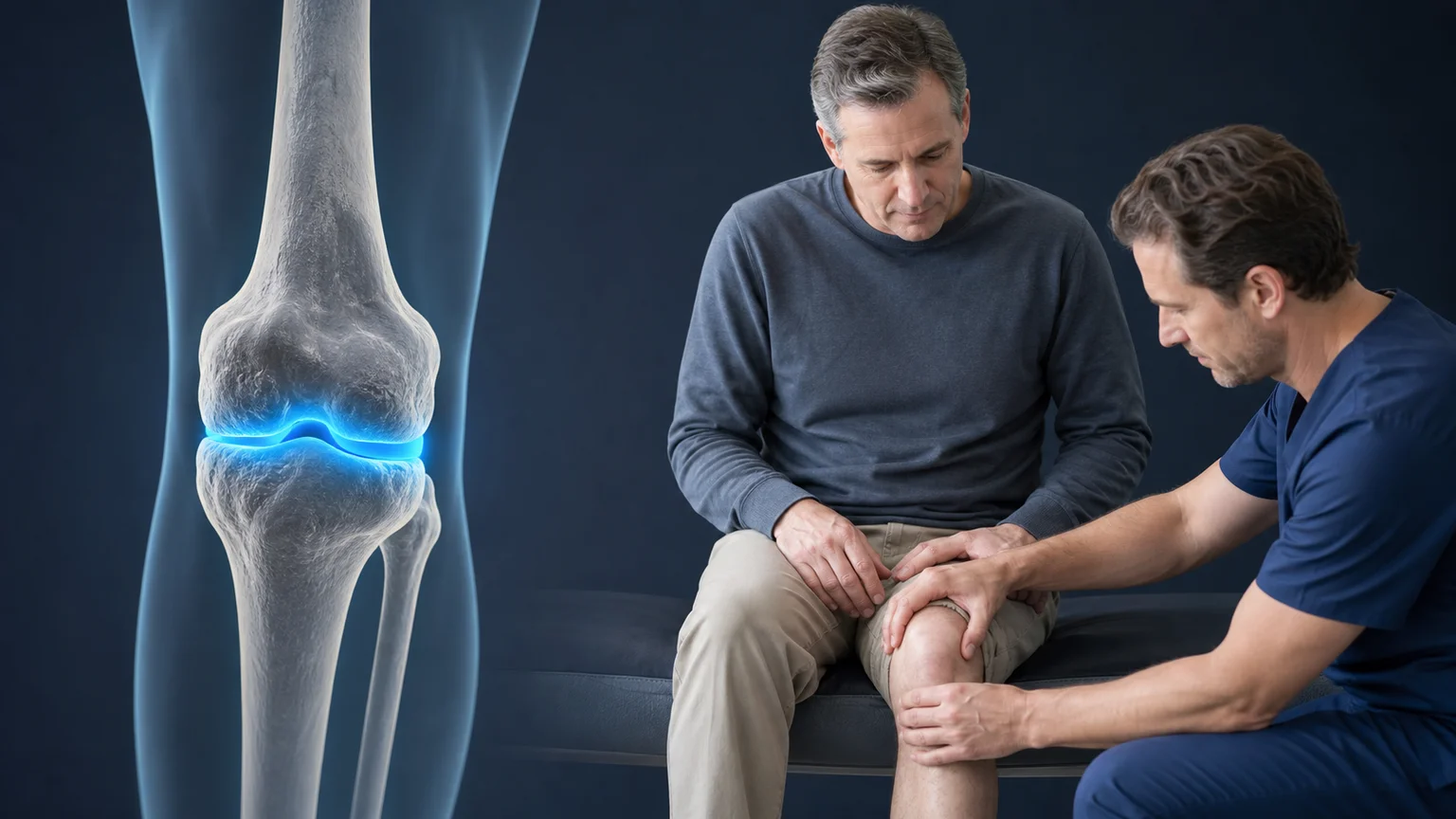
Cartilage is the smooth, load-bearing surface that lets the bones of the knee glide as you bend and straighten. When it thins or roughens, you tend to feel a deep ache along the joint line, stiffness that is worst after sitting, and a grinding sensation with movement. Some people notice the knee feels less stable on uneven ground, or that it swells after moderate activity.
The body also tries to protect the joint by changing how the surrounding muscles fire. Quadriceps weakness, hip compensation, and small shifts in your gait are common knock-on effects. Those compensation patterns can keep symptoms active long after the joint itself has settled, which is exactly why treating the knee in isolation often falls short.
Biomechanical Overload and Occupational Demands
Knee osteoarthritis does not develop in a vacuum. What you do for a living plays a real role in how fast it progresses and how much it limits you. People who spend long hours on their feet, repeatedly bend and lift, or drive between job sites tend to load the joint harder. Federal employees covered under OWCP, workers managing claims through Kansas or Missouri workers compensation, and patients with comparable claims from other states often arrive with osteoarthritis that years of occupational loading have accelerated.
Car accidents and other injuries matter here too. A direct hit to the knee, or a sudden change in how you walk after a lower body injury, can speed up cartilage wear in a joint that was already showing early changes. For these cases, an evaluation that clearly documents the link between the injury and the progression of arthritis supports both your treatment and your claim.
When Knee Pain Involves More Than the Joint
Tightness in the hip, restriction in the low back, or altered nerve signaling from the lumbar spine can all change how the brain reads knee pain. Sometimes the symptoms feel out of proportion to what imaging shows because the nervous system has become sensitized by chronic inflammation, poor sleep, or sustained stress. A thorough assessment has to look past the joint itself and check the whole lower kinetic chain, including the low back and the neurological factors that shape how pain is experienced.
The Science Behind Degeneration and Pain Sensitization
Healthy knees rely on cartilage, ligaments, muscles, and joint fluid working together to absorb and spread load. When cartilage integrity drops, the bone underneath starts taking forces it was never built for, and the joint lining can stay chronically inflamed. That inflammatory environment releases chemical signals that sensitize nearby nerves and can change how the central nervous system processes input from the entire leg.
So knee osteoarthritis pain is not purely structural. The brain weighs joint signals alongside stress, sleep, prior injuries, and overall conditioning. The stress-response side of the nervous system can amplify pain and keep the muscles around the knee guarded when it stays switched on for long stretches. That helps explain why two people with nearly identical imaging can report very different pain and very different limitation.
What to Expect During an Evaluation
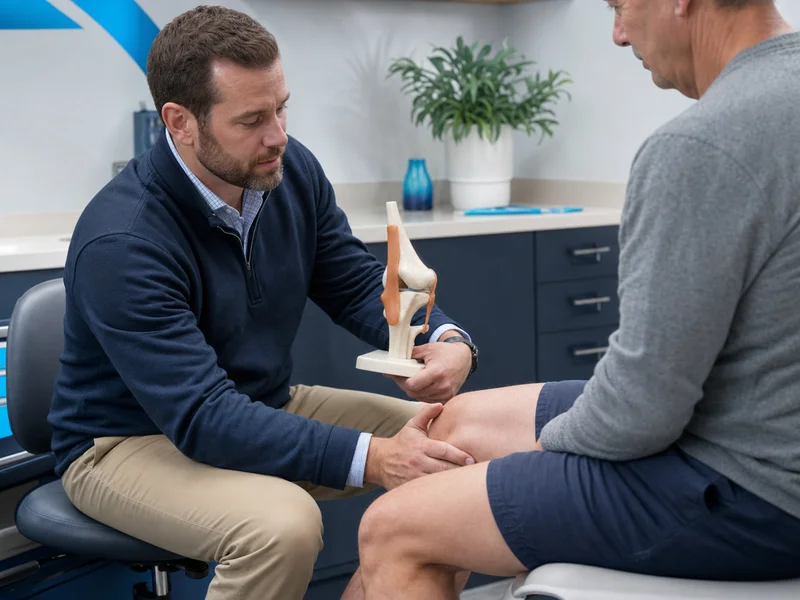
A knee osteoarthritis visit at Core Medical Center starts with a real conversation. Your provider asks about how the symptoms started and progressed, which activities are most limited, what work or injury factors may be feeding the problem, and what you have already tried. Prior imaging and records are reviewed when available, and new studies are ordered only when they are likely to change the plan.
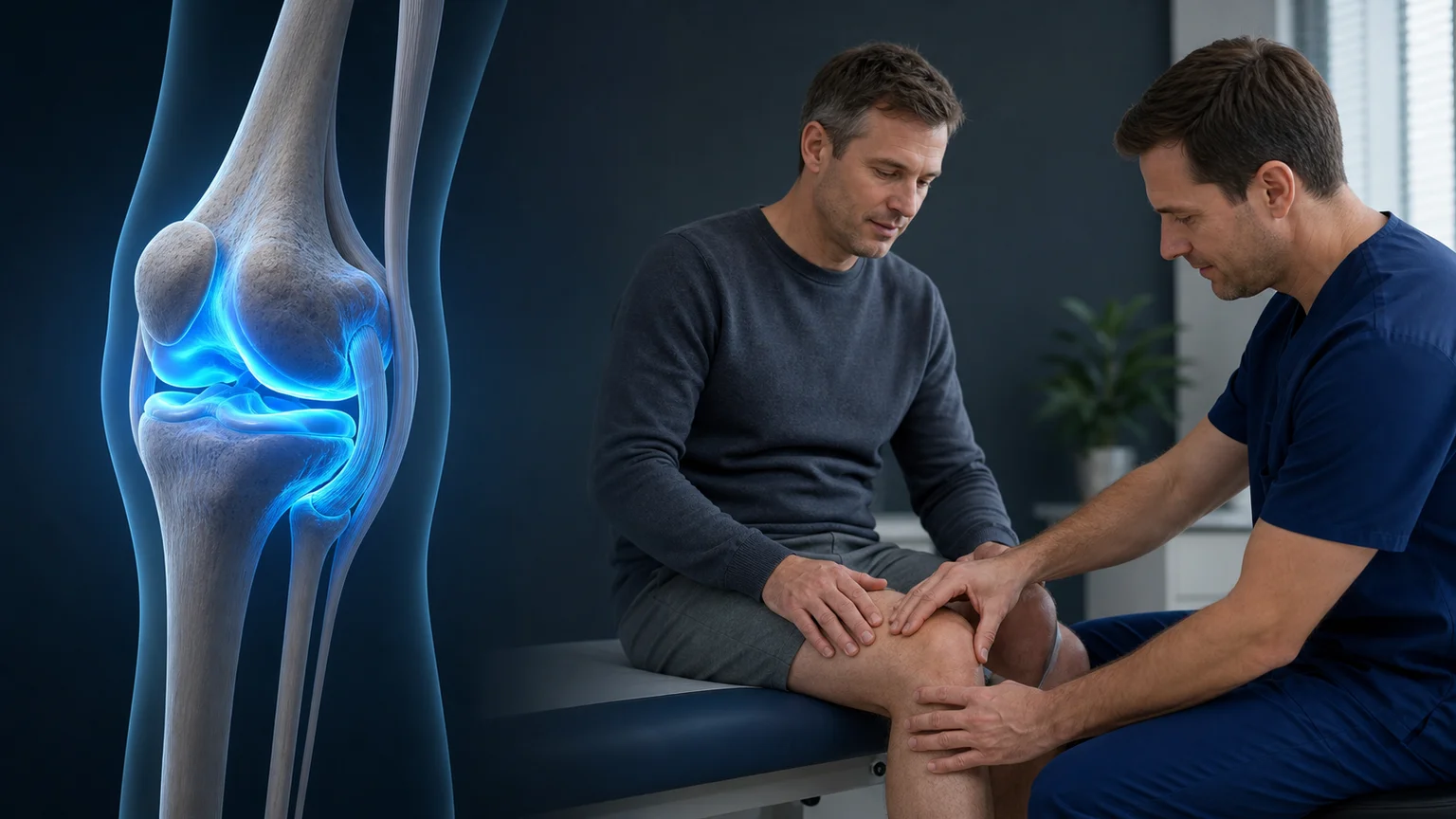
The physical exam covers knee range of motion, ligament stability, joint line tenderness, gait, hip and low back mobility, and lower body muscle function. For workers compensation or injury claims, the visit also documents objective findings that connect the condition to the covered event.
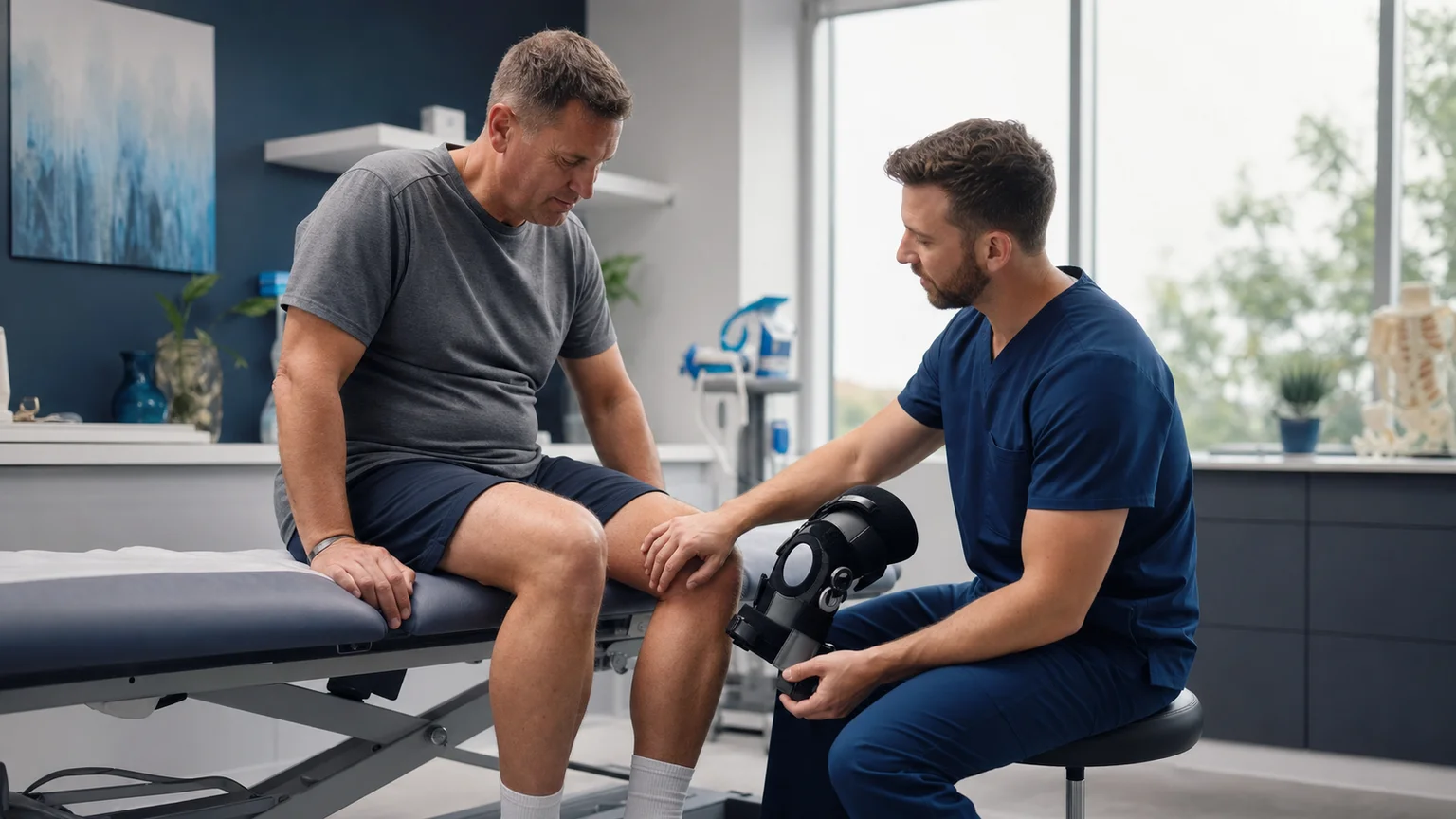
From there, the team lays out a plan that fits your goals, your job demands, and any case requirements. For some patients that means structured rehabilitation, activity changes, and hands-on care that fit a working schedule. For others it includes strategies aimed at systemic inflammation and the factors that influence joint health. When it is clinically appropriate, the medical team can build a non-surgical knee osteoarthritis program around your goals, and is candid about which conservative options fit your situation best. For knees that flared up after a crash or a workplace injury, that plan often folds in dedicated injury rehabilitation to rebuild strength and restore confident movement. Because the medical, therapy, and rehabilitation teams share one building in Blue Springs and at our Overland Park clinic, your evaluation and follow-up stay connected instead of scattered across offices.
Choosing a Clear Path Forward
Once you understand what is actually driving your knee pain, it is easier to judge whether you are dealing with straightforward cartilage wear, occupational overload, post-injury degeneration, or a sensitized pain response, or a mix. That clarity matters even more if you are managing an active workers compensation, injury, or federal OWCP case that needs both effective care and solid documentation.
If knee osteoarthritis is limiting your ability to work, stay active, or get through your day, a focused assessment can help you identify realistic next steps grounded in evidence and built around your situation. Explore the full range of conservative options through our medical rehabilitation services, then reach out to schedule an evaluation at our Blue Springs or Overland Park clinic and take the first step toward a more reliable knee.
Frequently Asked Questions
When should I see a doctor about knee osteoarthritis instead of managing it at home?
If knee pain has lasted more than a few weeks, is interfering with work or daily tasks, or no longer responds to rest and over-the-counter medication, it is reasonable to get a real evaluation. Swelling that keeps returning, the knee feeling unstable, or stiffness that limits your range of motion are all signs the joint needs more than self-care. An early assessment also helps you avoid building the compensation patterns that make the problem harder to treat later.
Can knee osteoarthritis be treated without surgery?
Yes, many people manage knee osteoarthritis effectively with non-surgical care. A non-surgical knee osteoarthritis program typically combines structured rehabilitation, strengthening for the muscles that support the joint, activity adjustments, and strategies that address inflammation. The goal is to reduce pain and improve function so you can stay active and delay or avoid more invasive steps.
Does my job affect how fast knee osteoarthritis progresses?
Occupational demands play a real role. Work that involves long hours on your feet, repeated bending and lifting, kneeling, or driving between job sites loads the knee harder and can speed up cartilage wear. If your knee arthritis is tied to your work, an evaluation that documents that connection supports both your treatment plan and any workers compensation or OWCP claim.
Will my workers compensation or OWCP case cover knee osteoarthritis care in Kansas City?
Coverage depends on the specifics of your claim, but many federal OWCP, Kansas, and Missouri workers compensation cases include care for work-related knee conditions. At our Blue Springs and Overland Park clinics, evaluations document the objective findings that connect your condition to the covered event, which is often what claim approval requires. It helps to bring any prior imaging, records, and claim information to your first visit.
How long does it take to feel better with a non-surgical knee program?
Timelines vary based on how advanced the arthritis is, your overall health, and how consistently you follow the plan. Some patients notice meaningful improvement in a few weeks of structured rehabilitation, while others with longstanding changes need a longer, steady course of care. Your provider will set realistic expectations at the evaluation and adjust the plan as your knee responds.