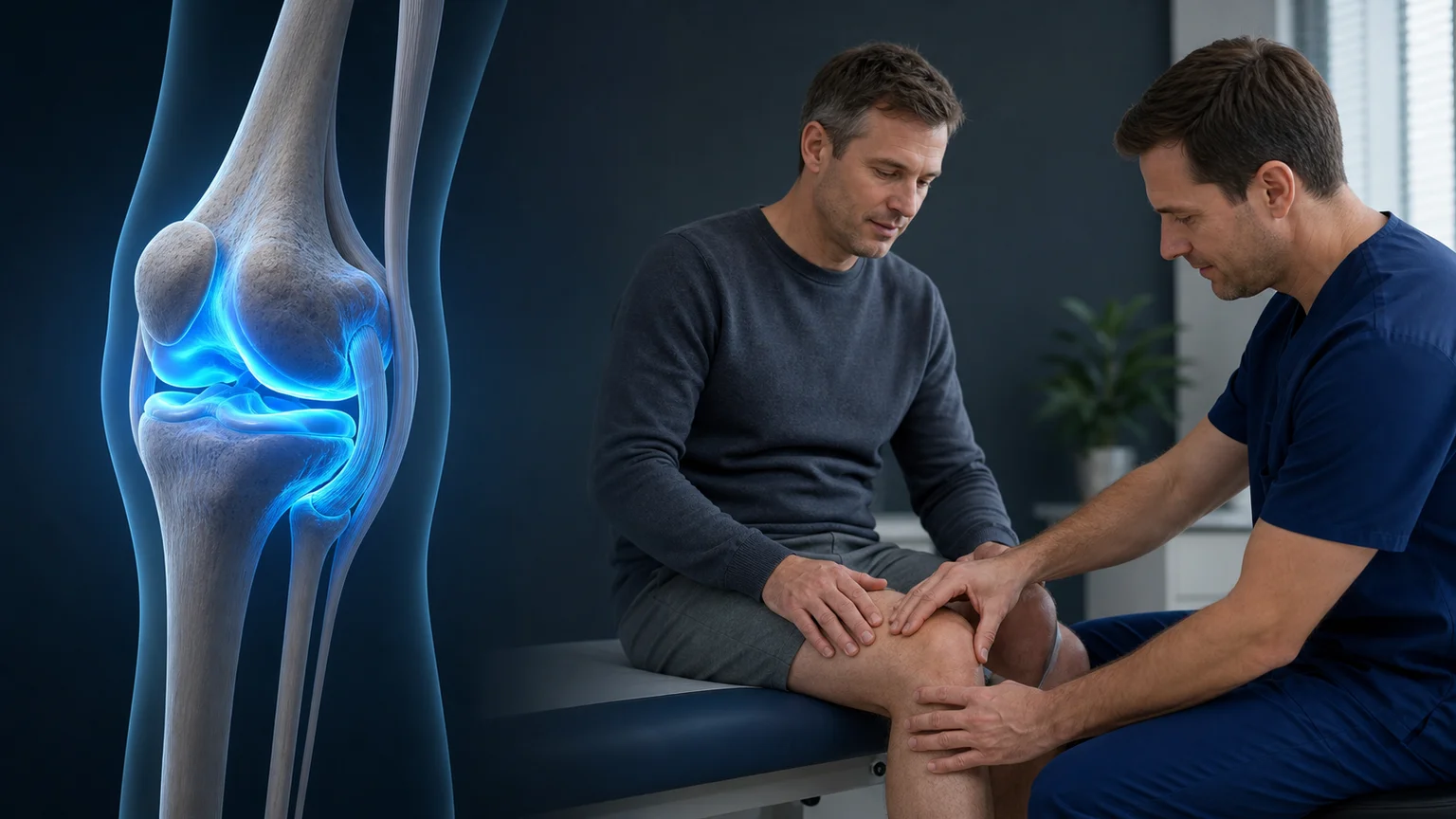


If a doctor has ever pointed at your X-ray and said your knee is “bone-on-bone,” you probably walked out of that visit feeling like a knee replacement was the only thing left to talk about. It is one of the most common phrases in orthopedics, and it is also one of the most misunderstood. At Core Medical Center, we hear it from patients across Blue Springs and the greater Kansas City area almost every week, and the conversation usually deserves a lot more nuance than that single phrase allows.
What “Bone-on-Bone” Actually Means
Knee osteoarthritis is a gradual breakdown of cartilage, the smooth tissue that cushions the ends of the bones inside your joint. As that cartilage thins, the space between the bones on an X-ray gets narrower. When the space looks very small, someone might describe it as “bone-on-bone.”
Here is the part that gets lost. The phrase suggests the cartilage is completely gone and that your bones are grinding directly against each other. In reality, that is rarely the full picture. Even in advanced arthritis, some cartilage usually remains. The narrowing you see on the film can come from several things at once, including cartilage thinning, changes in the bone itself, and inflammation in the joint. A tight-looking joint space is not the same as bare bone scraping on bare bone.
Why the X-ray Does Not Tell the Whole Story
X-rays are useful, and we use them, but they have real limits. An X-ray is a flat, two-dimensional image, and it does not show cartilage directly. It shows the gap where cartilage sits, then leaves the rest to interpretation.
The bigger surprise for most patients is this: how bad a knee looks on imaging often does not match how it feels. Some people have dramatic joint space narrowing and very little day-to-day pain. Others have milder-looking films and struggle to walk through the grocery store. Research on knee arthritis has shown this disconnect again and again. Your symptoms, your strength, and your function matter at least as much as the picture, which is why we never make a plan from an image alone.
Surgery Is Not the Only Path
The assumption baked into “bone-on-bone” is that the joint is finished and replacement is inevitable. For some patients, joint replacement is genuinely the right call, and we will tell you honestly when that is the case. But it is not the only option, and it is rarely the first one worth trying.
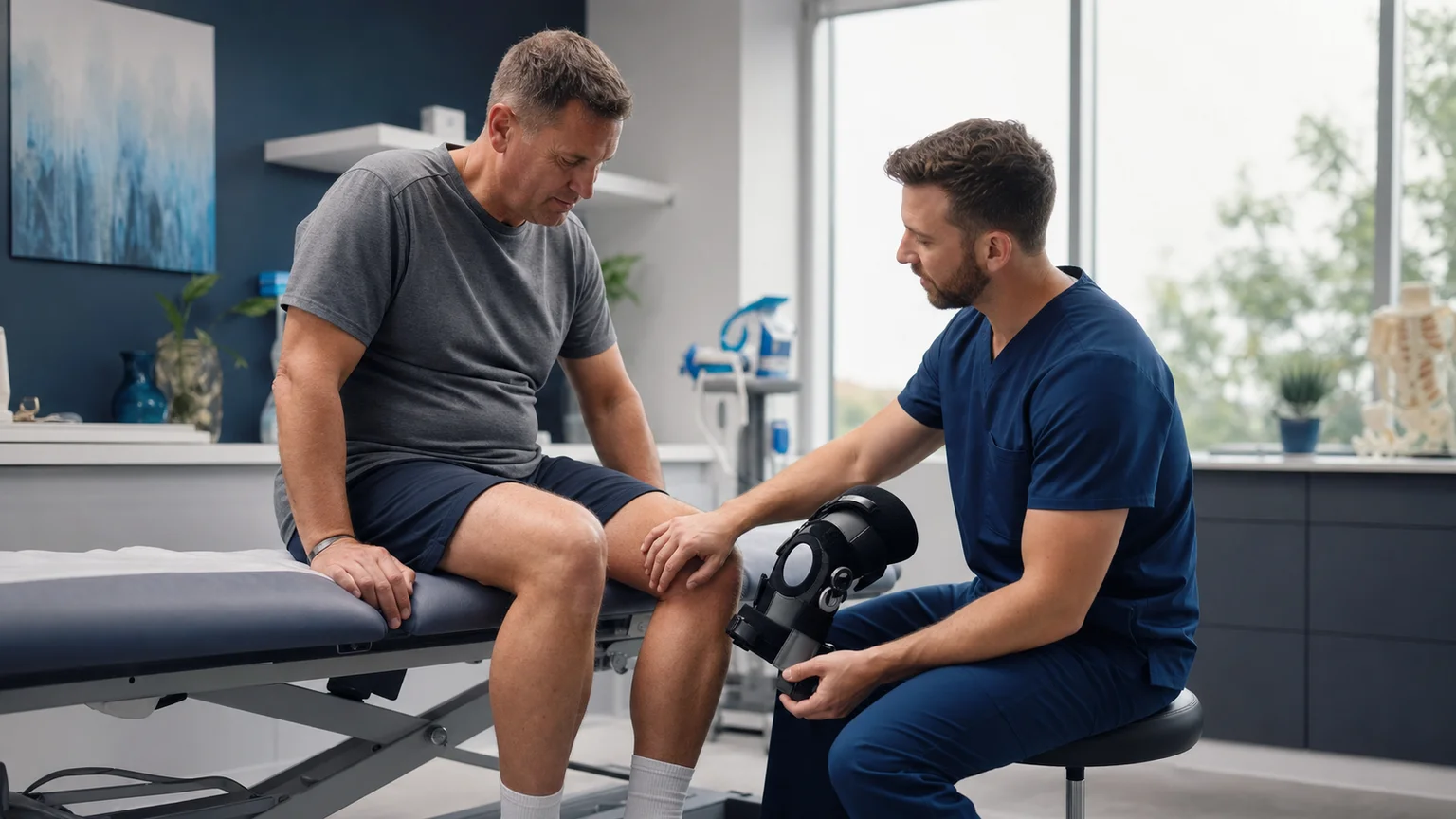
There is a real range of nonsurgical care that can calm symptoms and rebuild function:
- Targeted strengthening and movement. The muscles around the knee, especially the quadriceps and hips, act like a built-in brace. Building them up takes load off the joint and often reduces pain. This kind of structured physical therapy is, for many people, the single most effective thing they do.
- Weight management. Every pound of body weight translates to several pounds of force across the knee with each step. Even modest weight loss can meaningfully lower the stress on the joint.
- Medication for symptom control. Anti-inflammatory medicines and other pain relievers can take the edge off enough to let you stay active, which keeps the joint healthier over time.
- Joint injections. Corticosteroid or hyaluronic acid injections can quiet inflammation and improve comfort, sometimes for months at a stretch.
- Regenerative medicine options. Treatments such as platelet-rich plasma (PRP) use your body’s own healing signals to address inflammation and support the joint. We talk through what these can and cannot do so your expectations are grounded.
Most patients do best with a combination, not a single fix. Strengthen the knee, lighten the load, manage flare-ups, and the joint that looked “done” on paper can often do a great deal more than anyone expected. Pulling these pieces into one coordinated plan is exactly what our nonsurgical knee osteoarthritis program is built to do.
What to Do If You Have Been Told “Bone-on-Bone”
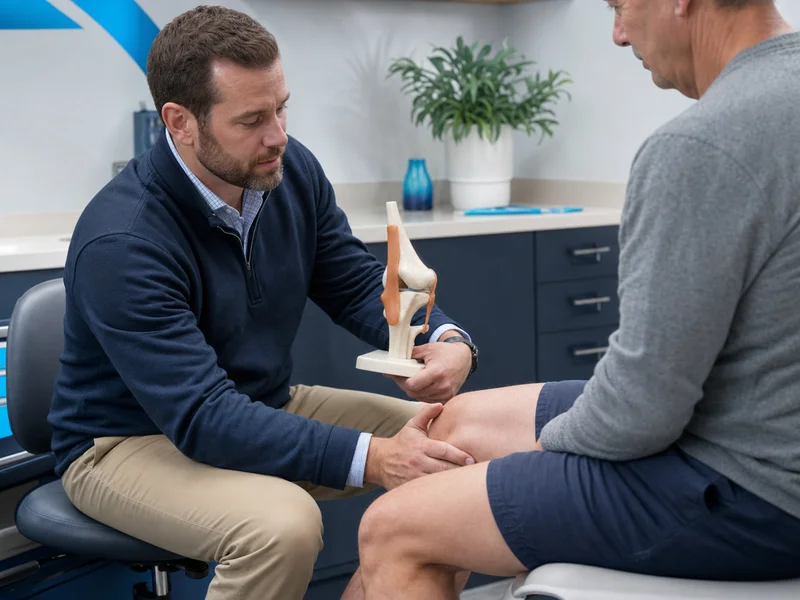
The most important takeaway is to not let one phrase decide your future. A worrying X-ray is a starting point for a conversation, not the end of one. What you need is a full evaluation that looks at the whole knee and the whole person: your imaging, yes, but also your strength, your goals, and how the knee actually behaves when you use it.
As an integrated medical clinic, we build that kind of complete picture before recommending anything. This is the same coordinated approach behind our broader medical rehabilitation services, where strengthening, weight management, and symptom care work together rather than in isolation. If you are in Blue Springs, Overland Park, or anywhere around Kansas City and you have been told your knee is bone-on-bone, you have more options than you may have been led to believe.
If you want to understand your own diagnosis and the full menu of care, start with our overview of knee osteoarthritis, then come talk with our team about a plan built around your knee, not just your X-ray.
Frequently Asked Questions
Does “bone-on-bone” always mean I need a knee replacement?
No. The phrase describes a narrowed joint space on an X-ray, not a guarantee that surgery is required. Many people with that finding do very well with strengthening, weight management, injections, and other nonsurgical care. We only recommend joint replacement when the full picture, including your symptoms and function, points clearly in that direction.
Why does my knee feel better or worse than my X-ray suggests?
Imaging and symptoms often do not line up. Some people have significant narrowing on film with little pain, while others have milder-looking X-rays and real difficulty walking. Pain involves muscle strength, inflammation, activity level, and joint mechanics, not just the gap visible on an image. That is why we evaluate the whole knee and the whole person before making a plan.
What nonsurgical treatments do you offer for knee osteoarthritis in Blue Springs?
We offer targeted strengthening and movement therapy, weight management, anti-inflammatory and pain medication, corticosteroid and hyaluronic acid injections, and regenerative options such as PRP. Most patients in the Blue Springs and Kansas City area do best with a combination tailored to their knee. The goal is to lower pain and rebuild function so you can stay active.
How long does it take to see results without surgery?
It varies by person and starting point, but many patients notice meaningful improvement within several weeks of consistent strengthening and load management. Injections can bring relief sooner, sometimes within days, and may last for months. We track your progress and adjust the plan so the gains build over time rather than fading.
Is it too late to avoid surgery if I have advanced arthritis?
Often it is not. Even in advanced cases, some cartilage usually remains and the surrounding muscles can be strengthened to protect the joint. Trying a well-built nonsurgical plan first rarely closes the door on surgery later, and for many people it postpones or removes the need entirely. A thorough evaluation is the best way to know your real options.