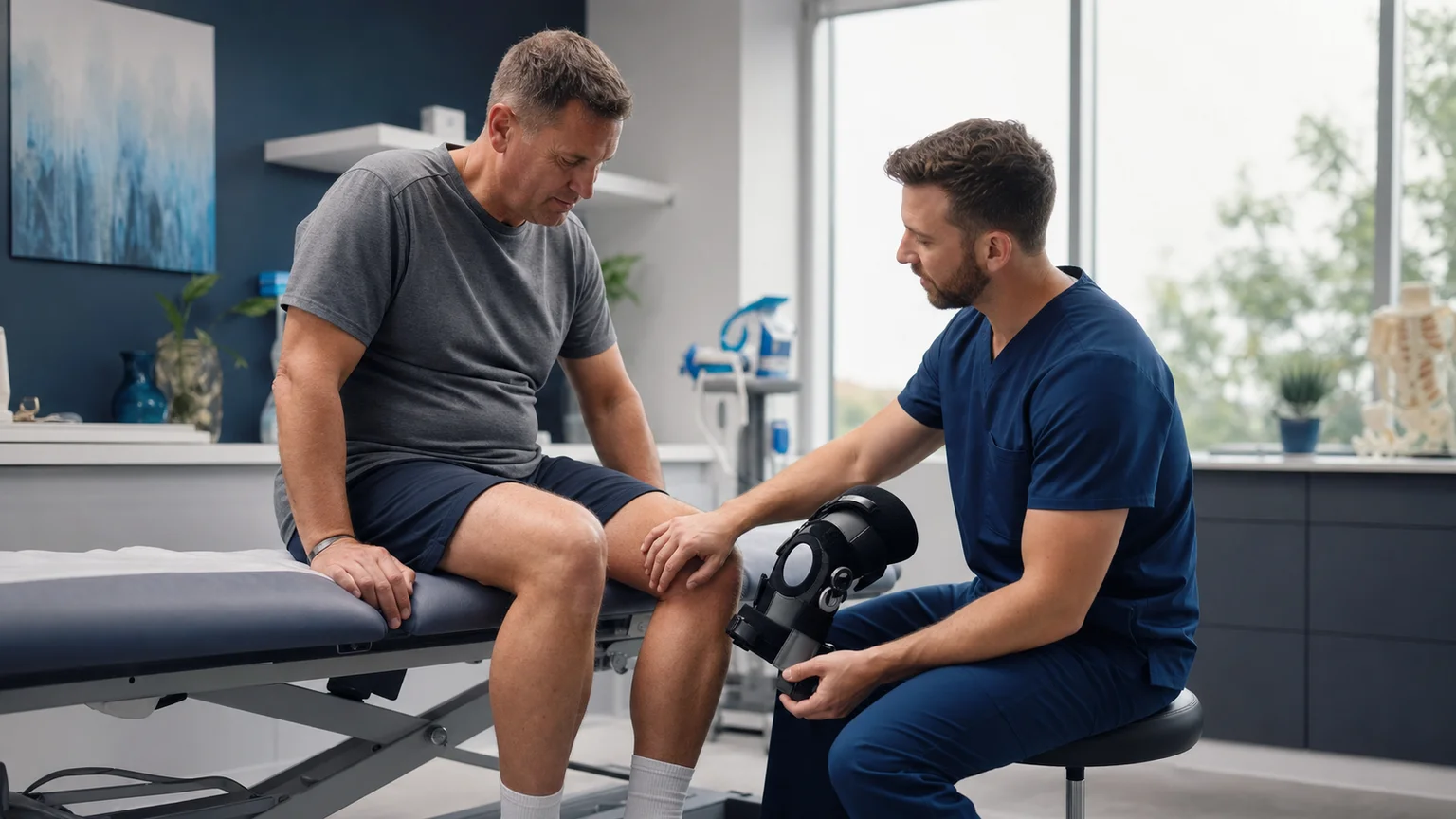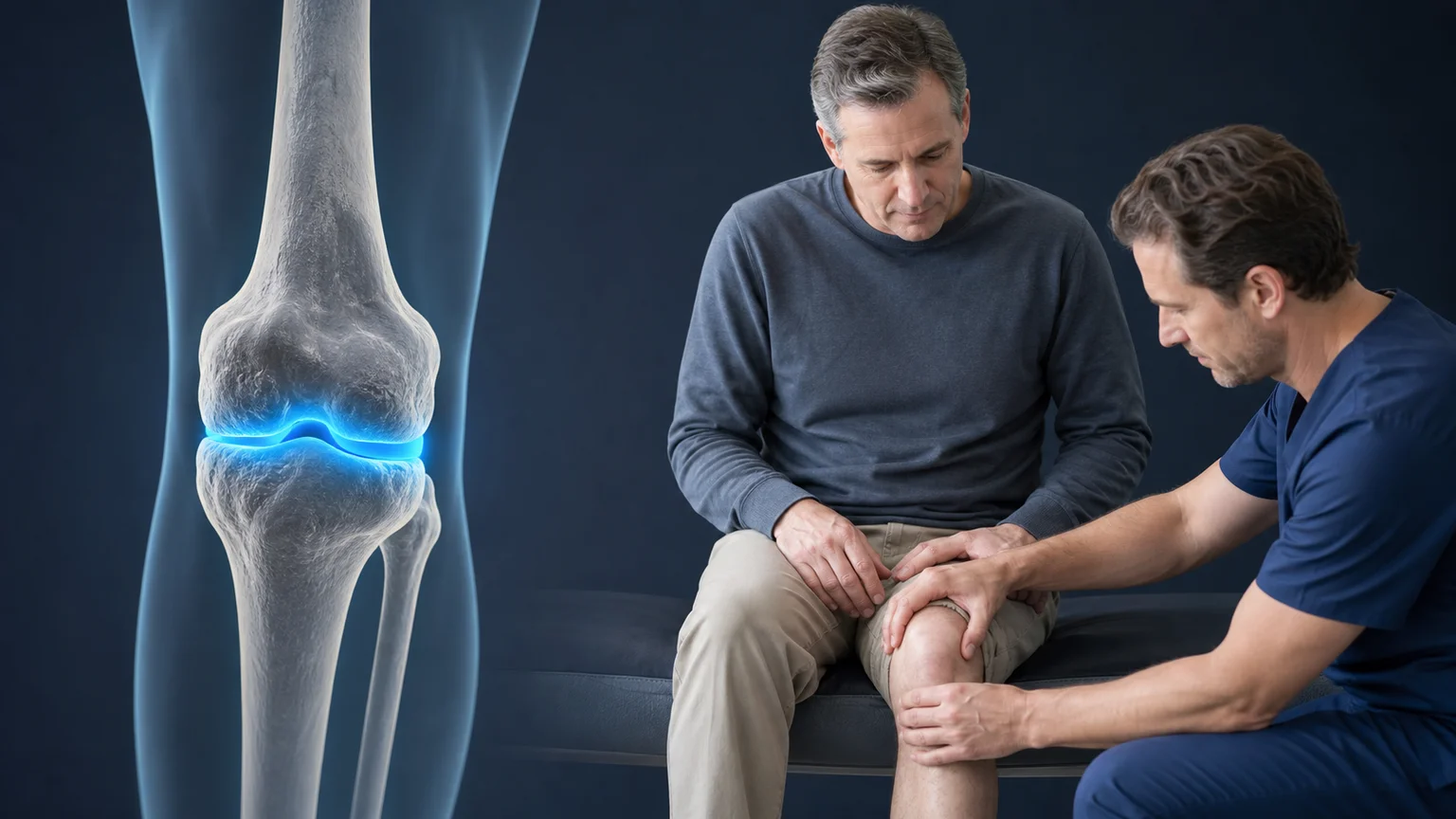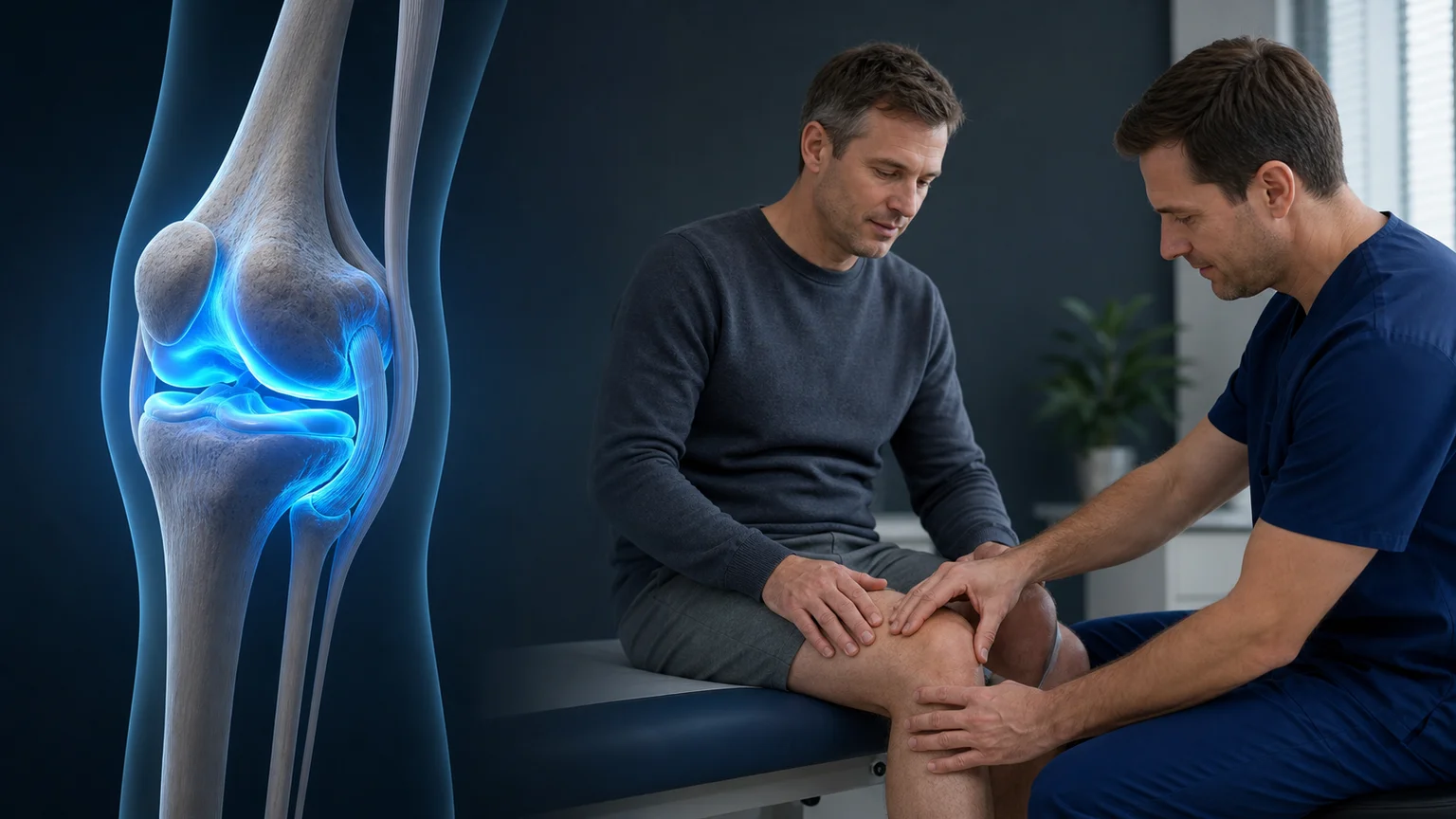

Knee pain is one of the most common problems we see at Core Medical Center, and it is also one of the most misunderstood. When your knee starts hurting, the first question is almost always the same. Did I hurt it, or is this arthritis? The answer matters more than people expect, because the path to relief looks different depending on what is actually driving the pain.
Here is how to think it through, and how we sort it out for patients across Blue Springs and the greater Kansas City area.
Arthritis Versus Injury: The Basics
Osteoarthritis is a wear and tear condition. The cartilage that cushions the ends of your bones gradually breaks down over years, so the pain tends to build slowly and get worse over time rather than showing up all at once. It is most common in adults over 50, and it often affects both knees. Morning stiffness that loosens up once you start moving around is a classic sign.
A knee injury behaves differently. It happens at a specific moment, often during sports, a fall, or an awkward twist. A torn meniscus, a sprained or torn ligament such as the ACL or MCL, or a tendon strain all tend to cause pain that starts suddenly. Many people remember hearing or feeling a pop, and swelling often shows up within hours rather than over months.
Questions to Ask Yourself
A few honest answers can point you in the right direction before you ever walk into the office.
- Did the pain start suddenly or gradually? Sudden onset usually points toward injury. A slow build points toward arthritis.
- Was there a specific event? A twist, a fall, or a hard landing suggests an injury.
- Is the knee locking, catching, or giving way? Mechanical symptoms like these often mean a meniscus or ligament problem.
- Is the stiffness worse first thing in the morning? Morning stiffness that eases with movement is a hallmark of arthritis.
- Are both knees affected? Arthritis is more likely to show up on both sides, while an injury usually involves one knee.
These questions are a useful starting point, not a diagnosis. Plenty of people have both an old injury and developing arthritis in the same knee, which is exactly why a proper exam matters.
When to See a Provider
Some knee pain settles down on its own with rest, ice, and a little time. But there are clear signs that you should have it looked at sooner rather than later. Get evaluated if you have significant swelling, you cannot put weight on the leg, the knee looks deformed, the joint is hot and red, or the pain simply is not improving after a week or two of home care.
Locking and instability deserve attention too. When a knee gives out or catches, that can signal a structural problem that will not heal on its own, and waiting often makes the repair harder.
How We Help at Core Medical Center
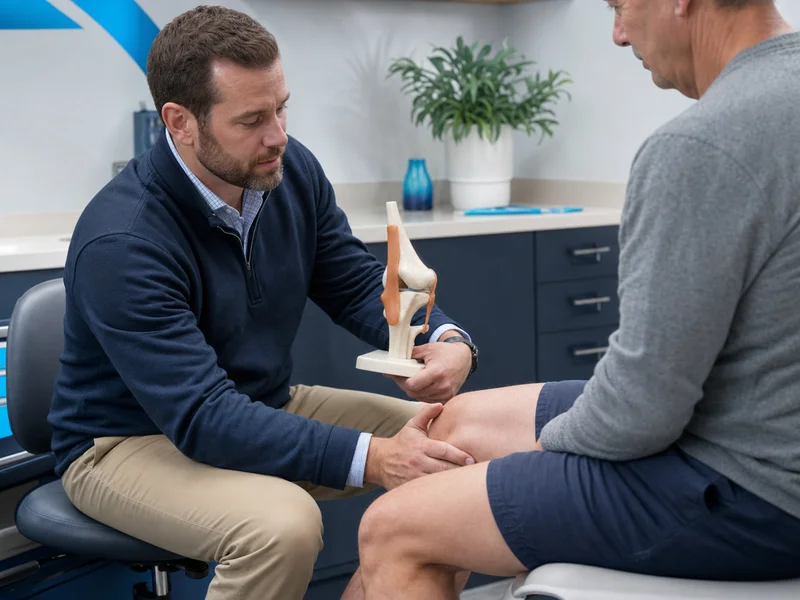
When you come in, we start with a thorough exam and, when it is needed, imaging so we can see exactly what is going on inside the joint. We would rather know than guess. From there we build a plan around your specific diagnosis instead of a one size fits all routine.
For arthritis, that plan may include physical therapy, bracing, activity adjustments, and conservative options aimed at reducing pain and improving how the knee functions. If you are dealing with ongoing joint wear, our nonsurgical knee osteoarthritis program walks through what long term management can look like and how we approach it without rushing toward surgery. You can also read more about knee osteoarthritis as a condition and what drives it.
For injuries, the focus shifts toward restoring stability and strength so the knee can support you again. Our injury rehabilitation services are built to rebuild that strength step by step so you can get back to the activities you actually enjoy, whether that is chasing kids around the yard or staying active on the trails around Blue Springs.
The Bottom Line
You do not have to live with knee pain, and you do not have to guess at the cause. Getting the right diagnosis is the first real step toward lasting relief, and it usually makes the rest of the process faster and far less frustrating.
If your knee has been bothering you and you are not sure whether it is arthritis or an injury, our team can help you find a clear answer. Explore the full range of outpatient rehabilitation care we offer, and reach out when you are ready to get to the bottom of what your knee is telling you.
Frequently Asked Questions
Can knee arthritis and a knee injury happen at the same time?
Yes, and it is more common than people think. An old injury can speed up cartilage wear, so you can have a meniscus or ligament problem and developing arthritis in the very same knee. That overlap is one of the main reasons a proper exam matters, since the treatment plan has to account for both.
How do I know if my knee pain needs imaging?
Imaging is not always necessary, but it helps when the cause is unclear, when there is significant swelling or instability, or when home care has not improved things after a week or two. At our Blue Springs office we start with a thorough exam and order imaging only when it will actually change the plan. The goal is to see what is happening inside the joint rather than guess.
Is surgery the only option for knee osteoarthritis?
No. Many people manage knee osteoarthritis well without surgery through physical therapy, bracing, activity adjustments, and other conservative care. Our nonsurgical knee osteoarthritis program is built around exactly this kind of long term, non operative management. Surgery becomes a conversation only when conservative options have been fully explored.
How long should I wait before seeing someone about knee pain?
If the pain is mild and improving, a week or two of rest and ice is reasonable. But if you cannot bear weight, the knee is locking or giving way, or the joint is hot, red, and swollen, you should be evaluated sooner rather than later. Waiting on a structural problem often makes it harder to repair.
Do you treat knee pain for active adults around Kansas City?
Yes. We see patients across Blue Springs and the greater Kansas City area, from weekend athletes to people who just want to keep up with daily life. Whether your knee pain comes from arthritis, an injury, or both, our team builds a plan around your diagnosis and your goals.