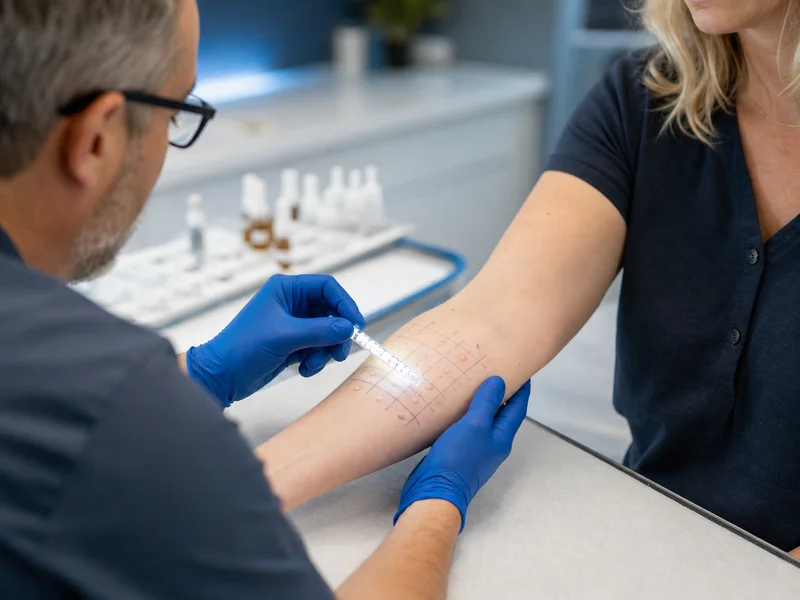


Your first allergy test is simpler than most people expect. A provider reviews your symptoms and health history, then either applies tiny drops of suspected allergens to your skin with a light prick or orders a blood draw. Skin test results show up during the visit, usually within 15 to 20 minutes, and most appointments finish within an hour. The biggest preparation step is medication timing: providers commonly ask you to pause antihistamines for several days before skin testing because they can mask your reactions.
The Two Types of Allergy Testing
Allergies happen when your immune system treats a harmless substance, like pollen or pet dander, as a threat. Millions of people live with allergic diseases, and testing is how you find out what actually triggers your symptoms.
Most clinics use one of two methods:
- Skin prick testing. The provider places small drops of allergen extract on your forearm or back, then lightly pricks the surface of the skin. If you are allergic, a small raised bump that looks like a mosquito bite forms at that spot, usually within 15 to 20 minutes, per the MedlinePlus allergy skin test overview.
- Blood testing. An allergy blood test measures IgE antibodies, the proteins your immune system makes in response to specific allergens. The sample goes to a lab, so results take days instead of minutes.
Skin testing is usually the first choice because you leave with answers the same day. Blood testing fits better when you have a widespread skin condition, cannot safely pause certain medications, or when your provider prefers it for your situation.
Why Antihistamines Are Paused Before Skin Testing
This is the question patients ask most: can you take antihistamines before an allergy test? For skin testing, the answer is usually no.
Skin testing works by provoking a tiny, controlled reaction. When you are allergic to a substance, your body releases histamine at the test site, which creates the raised bump the provider measures. Antihistamines block exactly that response. If the medicine is still active in your system, a real allergy can read as a negative result, and you walk out with wrong answers.
Keep these points in mind:
- The pause usually covers daily allergy pills, but many cold, sleep, and motion sickness products also contain antihistamines. Bring a complete list of everything you take.
- How long to pause varies by medication and by person. Your provider will give you exact instructions when you schedule. Follow those over anything you read online.
- Never stop a prescription medication on your own. Some prescriptions affect skin test results too, and stopping abruptly can cause other problems. Ask the clinic first.
- If you cannot safely pause your medications, say so. Blood testing does not require stopping antihistamines and may be the right alternative.
How to Prepare for Your Appointment
Preparation is mostly observation. The more detail you bring, the better your provider can target the test panel.
- Track your symptoms for a week or two before the visit. Note when they flare, where you were, and what you were doing.
- Watch for patterns tied to seasons, places, or exposures. Pollen seasons are growing longer in much of the country, so even “worse every spring” is useful detail.
- Write down every medication and supplement you take, with rough timing of your last doses.
- Wear a short-sleeved shirt or loose clothing so the provider can reach your forearms or back easily.
- Eat normally. Skin testing does not require fasting.
- Plan for about an hour so the waiting period never feels rushed.
What Happens During the Visit
Here is the typical flow of a first allergy testing appointment:
- History and exam. Your provider asks about your symptoms, home and work environment, pets, and family history of allergies or asthma.
- Test selection. Based on your story, the provider chooses a panel of allergens worth testing.
- Application. The skin is cleaned and marked, drops are placed, and each spot gets a quick prick. Most people describe it as a series of light scratches, not shots.
- The wait. You sit for about 15 to 20 minutes while any reactions develop. Itching at positive spots is normal and expected.
- The reading. The provider measures each bump and records which allergens reacted and how strongly.
- The conversation. You review the results together the same day and talk through what they mean. Any itching or redness usually fades within a few hours.
How Your Results Become a Treatment Plan
Testing is not the goal. Relief is. Once you know your triggers, your provider can build a plan around three levers:
- Avoidance. Practical changes like bedding covers for dust mites, timing outdoor exercise around pollen counts, or adjusting pet exposure.
- Medication strategy. Matching the right type of medicine to your specific triggers and symptom pattern, instead of guessing at the pharmacy shelf.
- Immunotherapy. For many patients, gradually increasing exposure to a specific allergen can help the immune system become less sensitive to it over time. Our allergy testing and immunotherapy program walks you through whether this option fits your results and your goals.
Because Core Medical Center is an integrated medical clinic, allergy care does not sit in a silo. If your symptoms overlap with sinus pressure, poor sleep, or an active injury recovery plan, the providers in our rehabilitation center work under one roof and can coordinate your care in one place.
Frequently Asked Questions
Can You Take Antihistamines Before an Allergy Test?
Usually not before skin testing. Antihistamines can block the skin reaction the test depends on, so providers commonly ask patients to pause them for several days first. Follow the exact instructions your provider gives you, and never stop a prescription medication without asking. If pausing is not safe or practical for you, blood testing is often an alternative.
Does Allergy Skin Testing Hurt?
Most people find it mildly uncomfortable at worst. The pricks feel like light scratches on the surface of the skin, not injections. Spots that react will itch for a short while, which is actually a sign the test is doing its job, and the irritation typically fades within a few hours.
How Long Does a First Allergy Test Visit Take?
Plan for about an hour. That covers the history review, applying the test, the 15 to 20 minute waiting period, and the results conversation. Blood testing visits are often shorter, but results take longer because the sample is processed at a lab.
What Allergens Can a Test Check For?
Common panels cover environmental triggers such as tree, grass, and weed pollens, dust mites, mold, and pet dander, plus certain foods when your history points that way. Your provider selects the panel based on your symptoms and exposures. Mention every suspect, even ones that seem unlikely.
What If Every Result Comes Back Negative?
Negative results are still useful information. They can point your provider toward nonallergic causes of your symptoms, such as irritants, sinus issues, or other conditions that mimic allergies. Depending on your history, your provider may recommend a different type of test or further evaluation rather than stopping there.
Allergy symptoms that drag on for months usually will not sort themselves out, but one short visit can replace all that guessing with a clear plan. Core Medical Center offers allergy testing at our Blue Springs clinic, serving patients across the Greater Kansas City metro, with an additional location in Overland Park, Kansas. Same-week appointments are typically available, so if congestion, itchy eyes, or unexplained reactions keep interrupting your life, schedule your first allergy test and get answers this week.