
Jaw dysfunction causes headaches by keeping the muscles that move your jaw in a state of constant, low-grade contraction. The temporalis muscle at your temple and the masseter along your cheek develop tight, irritated spots that refer pain upward into your head. The result usually feels like pressure or a dull ache around the temples, and it flares with chewing, clenching, or stress. Because the source sits in the jaw, care works best when it treats the joint and muscles, not just the head pain.
How Jaw Dysfunction Turns Into Head Pain
The temporomandibular joint, or TMJ, connects your lower jaw to your skull just in front of each ear. You use it thousands of times a day to talk, chew, swallow, and yawn. Problems with the joint and the muscles around it are grouped under the term temporomandibular disorders, often shortened to TMD.
Head pain develops through two main routes:
- Muscle overload. The temporalis fans across the side of your head and contracts every time you clench or grind. Overworked muscle develops taut bands and trigger points that send pain into the temple, forehead, and behind the eye.
- Shared nerve wiring. The trigeminal nerve carries sensation from the jaw, teeth, face, and much of the head. When the joint or jaw muscles are irritated, the brain can read those signals as head pain instead of jaw pain.
According to MedlinePlus, TMJ dysfunction commonly causes headaches along with jaw pain, clicking, and trouble opening the mouth. The headache is often one symptom of a jaw problem, not a separate condition.
Signs Your Headache Starts in Your Jaw
Jaw-driven headaches leave clues. These signs often travel together with TMJ and jaw pain:
- Pain centered at your temples or the sides of your head
- Headaches that show up in the morning, after a night of clenching or grinding
- Pain that gets worse with chewing gum, tough foods, or long conversations
- Clicking, popping, or catching when you open your mouth
- Tenderness when you press the muscles of your cheek or temple
- Ear fullness, ear pain, or ringing without an ear infection
- A jaw that feels tired, tight, or off track by the end of the day
You do not need every sign on the list. Even two or three, paired with recurring headaches, are reason to have your jaw examined.
TMJ Headache or Migraine? How to Tell the Difference
The two are easy to confuse, and they can occur together. A few patterns help separate them.
Migraine tends to cause throbbing pain, often on one side of the head, along with nausea, sensitivity to light and sound, and sometimes visual changes called aura. Routine activity like climbing stairs usually makes it worse.
A TMJ headache usually feels like steady pressure or a dull ache rather than throbbing. It sits at the temples or the sides of the head, often on both sides, and it tracks with jaw use. Chewing makes it worse, and your jaw muscles feel tender when pressed. It behaves much like a tension-type headache, which is exactly what jaw muscle tension can produce.
The two overlap. Jaw tension can trigger attacks in people who already get migraines, so treating the jaw sometimes reduces how often they strike. Sorting out which pattern you have matters, because the treatment differs. A structured headache and migraine program that examines your jaw, neck, and full headache history can pinpoint what is actually driving the pain.
What Drives Jaw Tension in the First Place
Most jaw tension builds from everyday habits and stress rather than a single injury. Common drivers include:
- Grinding and clenching. Bruxism, the habit of grinding or clenching the teeth, often happens during sleep. That is why many people wake with a headache and a sore jaw.
- Daytime clenching. Deadlines, traffic, screens. Many people hold their teeth pressed together for hours without noticing.
- Forward-head posture. Long hours at a desk push your head in front of your shoulders, which changes how the jaw rests and loads the joint.
- Oral habits. Constant gum chewing, nail biting, pen chewing, or resting your chin on your hand.
- Bite changes. Missing teeth, new dental work, or arthritis in the joint can alter the mechanics of every bite.
- Injury. A blow to the jaw or a whiplash-type event can irritate the joint long after the initial pain fades.
Conservative Care That Treats the Source
Most TMJ headaches respond to conservative care. Physical therapist guidance on treatment for TMD typically combines hands-on work, exercise, and habit changes. Options often include:
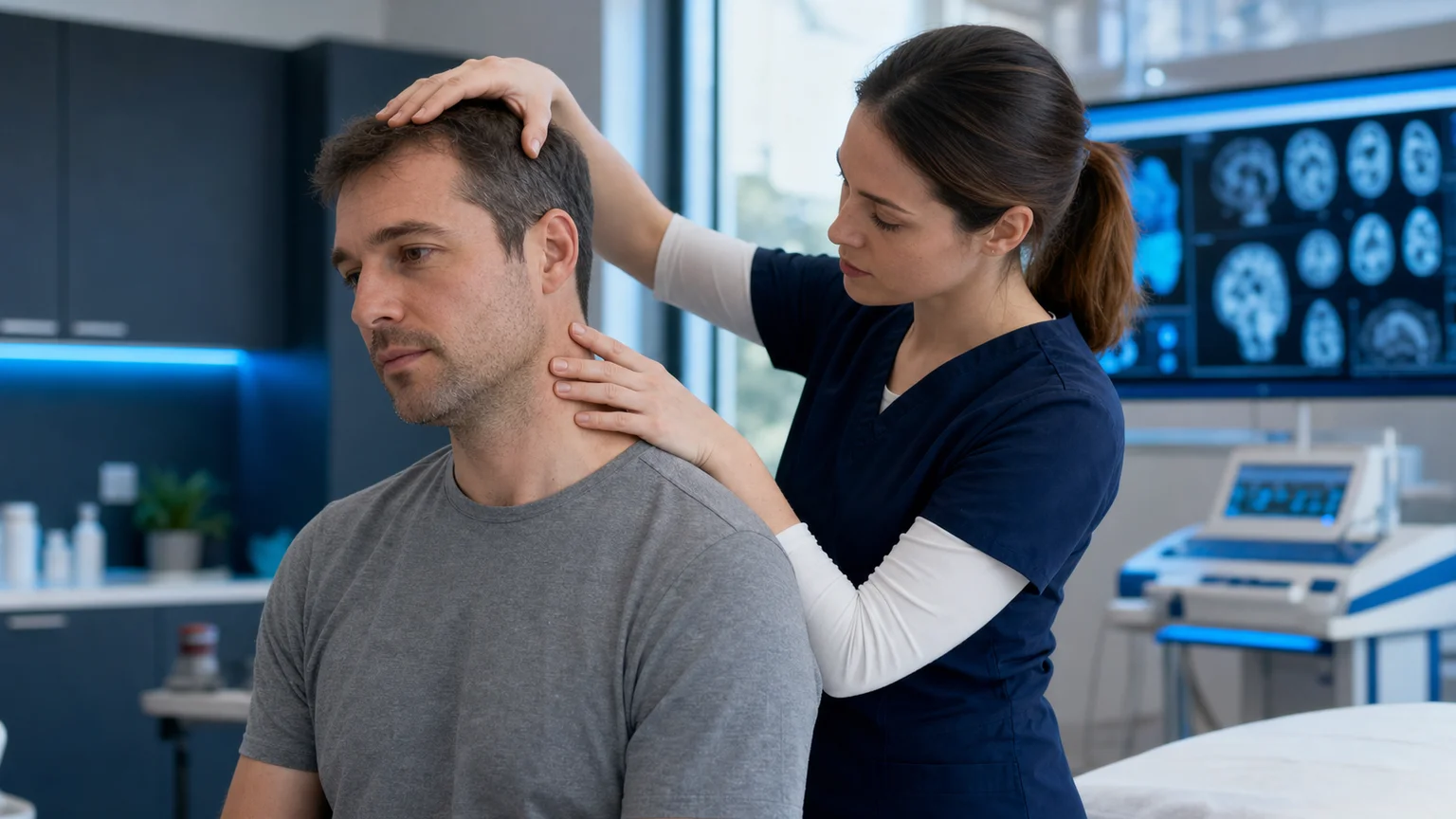
- Manual therapy. Hands-on techniques to mobilize the joint and release the masseter, temporalis, and deeper jaw muscles, along with the neck muscles that feed head pain.
- Dry needling. A trained provider uses dry needling to release the taut trigger points inside the jaw and temple muscles that keep referring pain into your head.
- Habit retraining. Learning a relaxed resting position, lips together and teeth slightly apart, plus cues that catch daytime clenching early.
- Posture and neck care. Exercises and workstation changes that take load off your jaw and upper neck.
- Stress management and heat. Simple tools that lower the baseline tension your jaw carries.
Your provider may also discuss a night guard if grinding during sleep appears to be part of the picture. None of these approaches involves surgery or a long recovery, and they can be adjusted as your symptoms change. Talk with a provider about the combination that fits your situation.
Frequently Asked Questions
Can Jaw Problems Cause Headaches Every Day?
Yes, they can. If you clench at night and carry jaw tension through the day, the muscles never get a chance to recover, and near-daily head pain can result. Daily headaches always deserve a professional evaluation, both to check the jaw and to rule out other causes.
Where Does a TMJ Headache Usually Hurt?
Most people feel it at the temples, in front of the ears, or along the sides of the head. Some notice pressure behind the eyes or pain spreading into the neck and shoulders. Pain that tracks with chewing or jaw movement points strongly toward the jaw as the source.
How Do I Know if I Clench or Grind at Night?
Look for morning clues: a sore or tired jaw on waking, headaches that start early in the day, and teeth that feel sensitive. A dentist may spot flattened or chipped tooth surfaces, and a sleep partner may hear grinding. If several of these fit, mention them to your provider.
Does Dry Needling for TMJ Headaches Hurt?
Most people feel a quick twitch or a brief, deep ache when the needle reaches a trigger point, followed by a sense of release. Soreness afterward is usually mild and short-lived. Your provider will explain what to expect and adjust the approach to your comfort.
When Should I See a Provider About Jaw-Related Headaches?
Make an appointment if headaches keep returning, if your jaw clicks, locks, or hurts with chewing, or if you wake with head or jaw pain more than occasionally. Seek urgent care for any sudden, severe headache unlike your usual pattern, or a headache with fever, confusion, weakness, or vision changes.
You do not have to keep chasing the same headache. At Core Medical Center, an integrated medical team brings chiropractic care, physical therapy, and pain management together under one roof, so your jaw, neck, and headache pattern are evaluated as one problem instead of three. Same-week appointments are typically available at our Blue Springs clinic, serving the Greater Kansas City metro. Reach out, and let us help you trace the pain back to its source.