

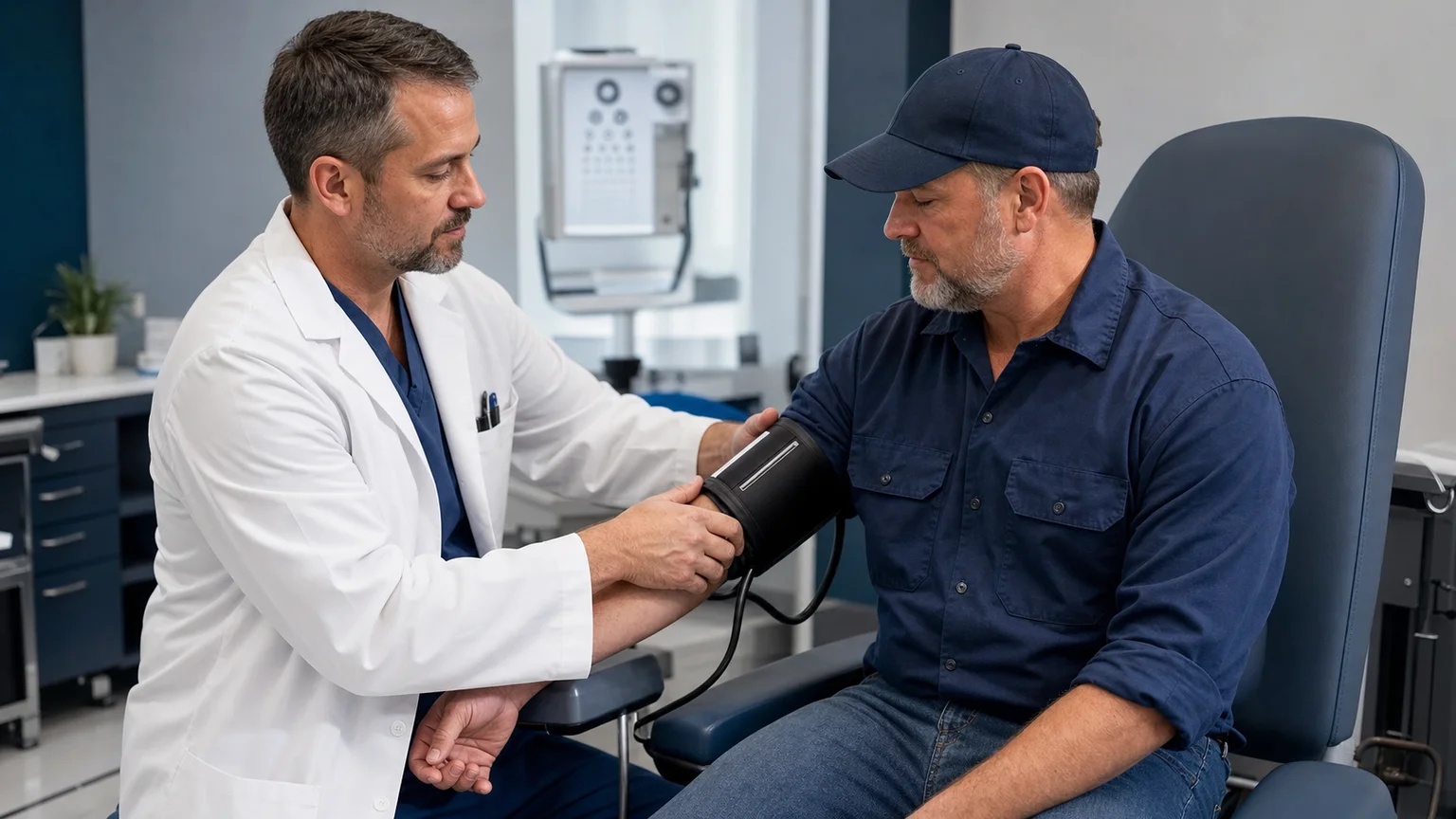
Most DOT physicals cost somewhere between $50 and $200, paid out of pocket as a flat fee, because health insurance rarely covers a certification exam. Retail pharmacy clinics and high-volume urgent care centers tend to sit at the low end, while dedicated occupational medicine clinics cover a wider range depending on what the visit includes. The checklist itself is set by federal rules, so the real difference between a cheap DOT physical and a more expensive one is the examiner and the service around the exam. Confirm the all-in price before you book.
Why a DOT Physical Is a Flat Fee You Pay Yourself
A DOT physical is not medical treatment. It is a federal certification exam that decides whether you can safely operate a commercial motor vehicle, using standards set by the Federal Motor Carrier Safety Administration for the DOT medical exam. Because the visit certifies fitness for duty rather than diagnosing or treating a problem, most health plans will not pay for it. Providers charge a flat self-pay fee instead.
That changes how you should shop:
- Ask for the total price when you call. A flat fee should include the exam, the paperwork, and your copy of the certificate.
- Ask about rechecks. If one reading runs high on exam day, some clinics let you return for a recheck at little or no added cost. Others charge for a full second exam.
- Ask your employer first. Many carriers pay for the exam or reimburse it.
What Drives the Price From One Provider to Another
Every examiner works from the same federal form, and every examiner must be listed on the National Registry of Certified Medical Examiners. So why does one exam cost $60 and another $150? It usually comes down to:
- Time. Budget providers book short slots. A clinic that schedules more time can review records for a managed condition instead of defaulting to a short card or a denial.
- Volume model. Pharmacy chains price the exam low and make it up on foot traffic. Occupational medicine clinics price the visit to cover examiner attention and record handling.
- Paperwork support. Results must be submitted through the National Registry, and your carrier and state licensing agency may need copies. Some providers handle all of it. Others hand you a card and wish you luck.
- Recheck and follow-up policy. A slightly higher fee that includes a same-week recheck often beats a cheaper exam with no second chance.
Clinic vs. Urgent Care vs. Pharmacy: What You Get
Pharmacy and retail clinics are usually the cheapest and fastest to book. The tradeoff is a rotating staff that may see only a handful of commercial drivers a month, tight appointment slots, and little flexibility if your exam turns up a borderline finding.
Urgent care centers land in the middle on price. Availability is good, but DOT exams are a side line for most of them, and the examiner you get may or may not work with FMCSA guidance every day.
A clinic built around DOT physicals and occupational medicine usually costs no more than urgent care, and the examiners handle driver certification as core work rather than an occasional add-on. That matters most if you have a health condition, because familiarity with the rules keeps a manageable finding from turning into a short card.
Why the Cheapest DOT Physical Can Cost You More
The exam fee is the smallest number in this decision. The certificate is the real product, and certificates are not all equal.
An examiner can certify you for up to 24 months, or issue a shorter certificate when a condition needs monitoring. Common examples include high blood pressure, diabetes, and sleep apnea. An examiner who rarely sees drivers may issue a 3-month card, or no card, in situations where good records and current treatment could support a longer certification. Every extra exam is another fee, and every week without a valid card is lost driving income.
So price the whole outcome, not the visit. A $60 exam that ends in a short card and two repeat visits costs more than a $110 exam done right the first time.
What the Exam Should Include at Any Price
Whatever you pay, the visit should follow the same federal checklist. Cleveland Clinic outlines what happens during a DOT physical, and at minimum you should get:
- A review of your health history, medications, and prior surgeries
- Vision and hearing checks, with your glasses, contacts, or hearing aids if you use them
- Blood pressure and pulse measurement
- A urinalysis that screens for markers like sugar and protein
- A physical exam covering heart, lungs, abdomen, spine, and limbs
- Completion of the Medical Examination Report and, if you qualify, your Medical Examiner’s Certificate
A provider that skips steps to hit a rock-bottom price is selling a certificate that may not hold up. If your employer also asked for a hiring exam, see what a pre-employment physical includes and how it differs from the DOT exam.
How to Pay Less Without Gambling on Your Card
You control more of the outcome than you might think:
- Bring your glasses or contacts, hearing aids, and a current medication list.
- If you treat a chronic condition, bring a note or recent records from the doctor who manages it. If you use a CPAP machine, bring the compliance report.
- Arrive rested and give yourself time before the blood pressure check.
- Book with a provider that quotes one flat price and handles the paperwork.
One more way to save: consolidate. If your company also needs drug and alcohol screens, injury care, or return-to-work exams, using one provider for all of its occupational health services cuts repeat visits and keeps records in one place.
Frequently Asked Questions
Does Health Insurance Cover a DOT Physical?
Usually not, because it is a certification exam rather than diagnosis or treatment. Providers charge a flat self-pay fee. Many employers pay for the exam or reimburse drivers, so check with your carrier before you book.
How Long Is a DOT Medical Card Good For?
A medical examiner can certify you for up to 24 months. If you have a condition that needs monitoring, such as elevated blood pressure or diabetes, the examiner may issue a certificate for a shorter period. Your examiner will explain the certification length and what to bring next time.
Is the Urine Test at a DOT Physical a Drug Test?
No. The urinalysis in a DOT physical screens for markers like sugar, protein, and blood, which can point to conditions that need follow-up. Drug and alcohol testing is a separate service that employers order under different rules.
Can I Pass a DOT Physical With High Blood Pressure?
Many drivers with managed blood pressure are certified, sometimes with a shorter card while the condition is monitored. Bring your medication list and recent readings from the provider who manages your treatment. The examiner makes the final call based on FMCSA standards, so talk with your provider about your specific numbers.
Who Is Allowed to Perform a DOT Physical?
Only a medical examiner listed on the FMCSA National Registry, which includes physicians, chiropractors, nurse practitioners, and physician assistants who complete the required training and testing. Confirm the examiner is on the registry before you book. A certificate from an unlisted examiner is not valid.
Ready to get it done right the first time? Core Medical Center is an integrated medical clinic in Blue Springs, MO, with a second location in Overland Park, KS, serving drivers across the Greater Kansas City metro. Same-week appointments are typically available, and the team handles the full checklist and the paperwork with your certificate. Call the clinic for the current exam price, then come in with your records and leave with a card you can count on.