
Elbow pain has a way of sneaking into everything you do. Reaching for a coffee mug, gripping the steering wheel on I-70, lifting a kid out of a car seat. When that joint hurts, daily life in Blue Springs and the wider Kansas City metro gets a lot harder. At Core Medical Center, our medical team treats elbow pain by finding the cause, not just quieting the symptom.
Common Causes of Elbow Pain
Most elbow pain comes from repetitive strain and overuse, and two conditions show up again and again.
Lateral epicondylitis, better known as tennis elbow, affects the outer side of the joint. It develops when the tendons connecting your forearm muscles to the outside of the elbow become irritated and inflamed, often from repeated gripping or twisting.
Medial epicondylitis, or golfer’s elbow, is the mirror image. It involves the tendons on the inner side of the elbow and tends to follow activities that flex the wrist and fingers over and over.
You do not have to play tennis or golf to get either one. We see them in painters, mechanics, warehouse workers, hairstylists, and office workers who type all day.
Other common sources include:
- Cubital tunnel syndrome, where the ulnar nerve gets compressed near the inner elbow and causes tingling or numbness in the ring and pinky fingers
- Bursitis, an inflammation of the small fluid-filled sac that cushions the tip of the elbow
- Arthritis, which can wear down the joint over time
- Sprains, strains, and old fractures that never fully settled down
Because the symptoms can overlap, an accurate diagnosis matters. Numbness from a pinched nerve is treated very differently from an inflamed tendon.
Our Diagnostic Process
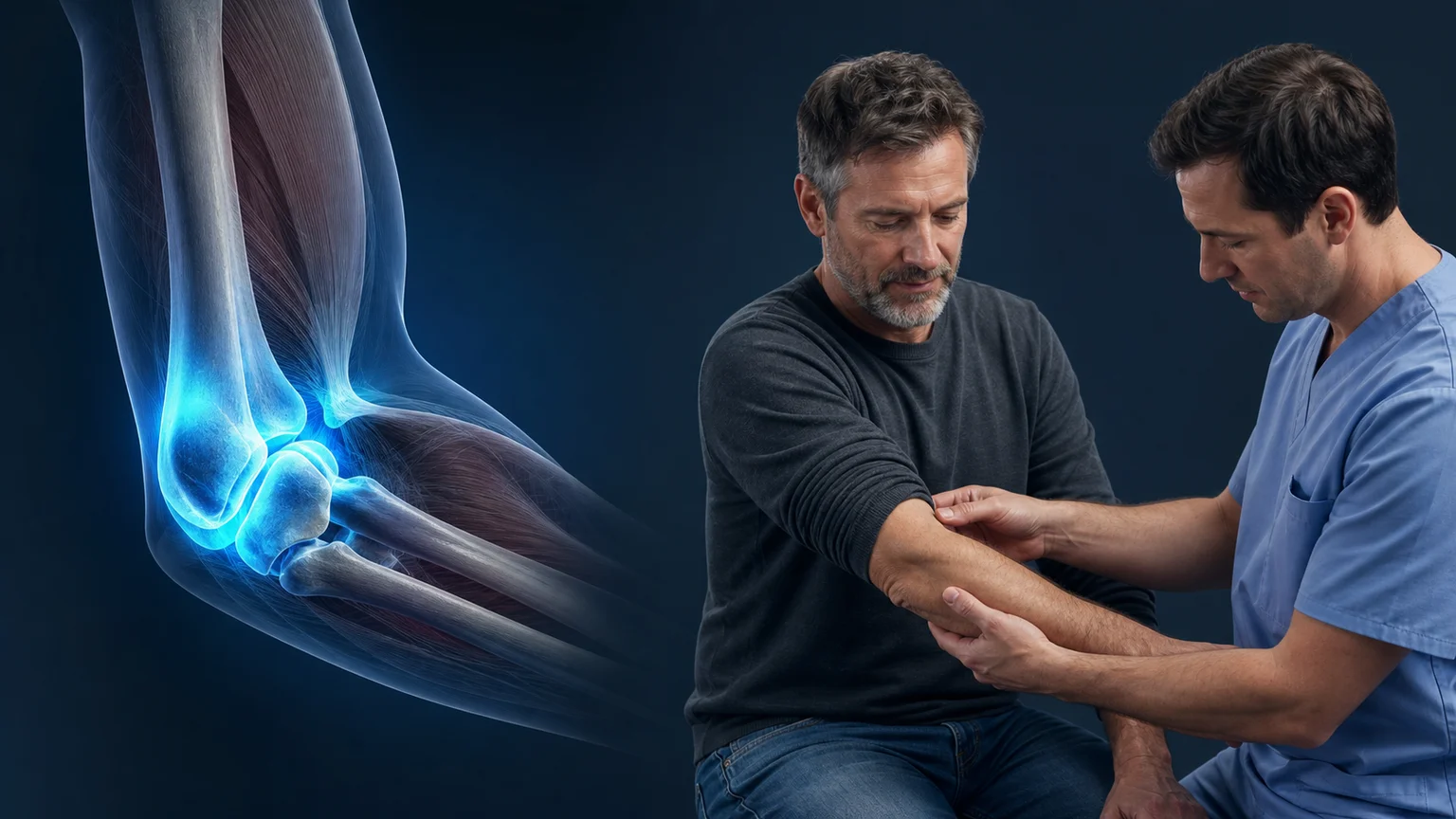
When you come to Core Medical Center for elbow pain, we start by listening. A careful history tells us how the pain began, what makes it worse, and how it affects your work and your sleep. From there we move into a hands-on physical exam to test strength, range of motion, and the specific movements that reproduce your pain.
When the picture needs more detail, we use diagnostic imaging such as X-rays to look at the bones and joint, or ultrasound to assess the soft tissue. The goal is simple. We want to know exactly what is generating your pain before we build a plan around it.
Treatment Options
There is no single fix for every elbow, so we tailor each plan to the person in front of us.
For overuse injuries like tennis elbow and golfer’s elbow, the foundation is usually a blend of relative rest, manual therapy, and a progressive set of strengthening exercises. Loading the tendon in the right way, at the right time, is what helps it heal and become more resilient. Much of this hands-on, exercise-based recovery happens through our structured physical therapy program, where each phase is paced to your healing and your goals.
Hands-on care plays a big role. Soft tissue therapy releases muscle tension and improves blood flow to the irritated area, while joint-focused techniques help restore smooth, comfortable motion through the elbow and the surrounding forearm and wrist.
For stubborn cases that have not responded to conservative care, we can discuss additional options such as regenerative medicine approaches or shockwave therapy, which are designed to stimulate the body’s own repair response. We will walk you through what each option involves and whether it fits your situation.
Just as important, we coach you on activity modification and ergonomics. Small changes to how you grip a tool, set up your desk, or swing a racquet can be the difference between a one-time recovery and a problem that keeps coming back.
When to Seek Help
A tweaked elbow that eases up in a day or two is usually nothing to worry about. You should get it checked, though, if your pain:
- Lasts more than a few days or keeps returning
- Comes with swelling, warmth, or visible deformity
- Includes numbness, tingling, or weakness in the hand
- Limits your range of motion or your grip
Early care tends to mean faster recovery. Tendon and nerve problems caught early are far easier to settle than the same issues left to become chronic.
Caring for the Whole Arm
The elbow rarely works alone. Tight forearms, an irritated wrist, or restricted shoulder motion can all keep an elbow flare going. That is why we look at the full chain when something is not healing the way it should. If your symptoms reach into the hand, our team also helps people with hand and wrist pain get back to comfortable, confident use of the arm.
If elbow pain is slowing you down, you do not have to push through it. Explore the full range of rehabilitation and movement services we offer, or read more about how we approach elbow pain at Core Medical Center, and reach out when you are ready for a clear diagnosis and a plan built around your goals.
Frequently Asked Questions
How long does it take for tennis elbow or golfer’s elbow to heal?
Many overuse elbow injuries improve within six to twelve weeks of consistent, well-paced care, though stubborn cases can take longer. The biggest factor is loading the tendon correctly with a progressive strengthening plan rather than simply resting and hoping it settles. A guided program helps the tendon rebuild strength so the problem is less likely to return.
Do I need surgery for chronic elbow pain?
The large majority of elbow pain responds to conservative, nonsurgical care such as manual therapy, targeted exercise, activity changes, and ergonomic adjustments. Surgery is rarely the first step and is usually reserved for cases that have not improved after a thorough course of conservative treatment. Our team will be honest with you about whether a more advanced option is worth considering.
What is the difference between tennis elbow and a pinched nerve?
Tennis elbow is an irritated tendon on the outer elbow and usually causes pain with gripping and lifting. A pinched nerve, such as cubital tunnel syndrome, tends to cause tingling, numbness, or weakness that travels into the ring and pinky fingers. Because they are treated very differently, an accurate diagnosis is the most important first step.
Can I keep working or exercising with elbow pain?
Often yes, with the right modifications. We coach patients in Blue Springs and the wider Kansas City area on how to adjust grip, workstation setup, and technique so they can stay active while the tendon recovers. Pushing through sharp or worsening pain, however, usually slows healing and is worth avoiding.
When should I see a doctor for elbow pain?
You should have your elbow evaluated if the pain lasts more than a few days, keeps returning, or comes with swelling, numbness, tingling, or noticeable weakness in the hand. Early care almost always means a faster, smoother recovery. Catching a tendon or nerve issue early is far easier than treating it once it becomes chronic.