

If the migraine versus tension headache question keeps coming up for you, you are not alone. Head pain can interrupt work, sleep, and plans, and it is not always obvious what pattern you are dealing with, especially when the symptoms shift from one episode to the next.
The good news is that a few practical details can point you in a clearer direction. How the pain builds, what else you feel during it, and what tends to set it off all carry useful clues. The goal here is not to self-diagnose. It is to notice a few clear signals so you can respond sooner and with less guesswork.
Why Migraine and Tension Headaches Can Look Similar
Both patterns can show up after long screen time, high stress, poor sleep, or skipped meals. Pain can also move around during the day, which makes it harder to label.
Overlap is another reason. Some people experience more than one headache type. A tension pattern can be common during busy seasons, while a migraine pattern shows up less often but hits much harder when it does.
How Migraine and Tension Headaches Usually Feel
These descriptions are general, but they help most people spot what sounds familiar.
Migraine Symptoms That Often Stand Out
Migraine tends to feel like more than head pain. The discomfort is often moderate to severe and may throb or pulse, and normal movement can make it worse.
You might also notice nausea, sensitivity to light or noise, or a foggy feeling that lingers after the pain eases. Some people feel off for hours before the headache starts, even without a visual aura. If you are tracking a pattern, writing down the full set of symptoms is usually more helpful than rating pain alone.
Tension Headache Symptoms You May Notice First
Tension headaches are often described as pressure or tightness, like a band across the forehead or temples. The pain is usually steady and mild to moderate.
This pattern commonly builds over the course of the day, especially with prolonged sitting, jaw clenching, or a tense upper back. It can feel draining and annoying, but it is rarely as disabling as a migraine episode. Noting where the tightness starts and how it spreads helps you tell tension headaches apart from other patterns.
Where Neck Tension Fits In
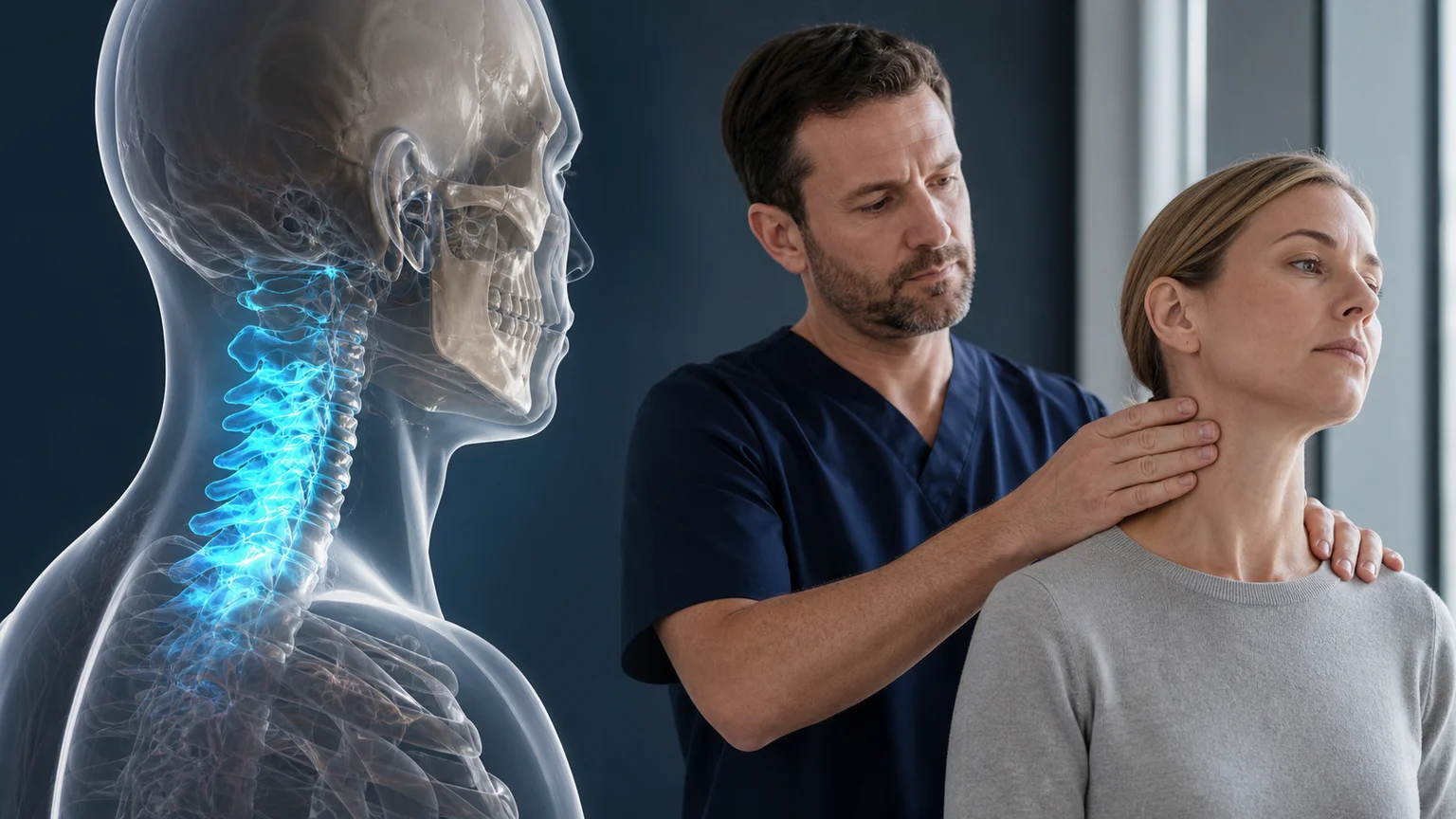
Neck tension headaches often begin at the base of the skull or upper neck and travel forward toward the temples or behind the eyes. They can flare after a long commute, hours of laptop work, or a night of sleeping in an awkward position.
Because this pattern is often mechanical, it tends to improve once you address how the neck, shoulders, and upper back are handling daily strain. It is also common for these headaches to spike when stress and posture problems stack up at the same time. If neck and upper-back tension is part of your picture, that connection is worth taking seriously.
Common Headache Triggers and What to Do Next
Most headaches do not have one single cause. A handful of repeatable triggers usually stack together. The best starting point is choosing small changes you can actually keep.
Common headache triggers include:
- Irregular sleep, especially late nights followed by early mornings
- Dehydration or missed meals
- Caffeine changes in timing, amount, or sudden cutoff
- High stress and jaw tension
- Long screen time without breaks
- Bright lights, strong smells, or loud environments
- Neck and shoulder tension from posture or repetitive tasks
A simple one-week reset can help. Keep meals steady, hydrate earlier in the day, and take quick posture breaks during screen time. If headaches keep returning, track your sleep, food timing, stress level, and where the pain begins. Patterns often show up faster than people expect.
When It Is Worth Seeking Help
It is time to get support when headaches are frequent, changing, or starting to control your choices. A focused evaluation can help clarify which pattern is most likely, what keeps it repeating, and what to try first.
Seek urgent medical care right away if you have any of the following:
- A sudden, severe headache that feels unlike your usual pattern
- Weakness, confusion, trouble speaking, or fainting
- Fever with a stiff neck
- A headache after a head injury
- Vision changes that feel alarming
How We Support Headache Clarity at Core Medical Center
At Core Medical Center, our Blue Springs and Greater Kansas City team looks at the whole picture rather than a single symptom. When your headaches suggest a mechanical driver, we may include chiropractic care in your plan, especially if neck and upper-back tension seems to reload the same cycle.
When headaches keep repeating or feel tied to larger stress and recovery factors, a structured headache and migraine treatment program can map your triggers, address the mechanical drivers, and build a plan you can sustain. This work sits within our broader pain control services, so if sleep quality, stress load, and everyday triggers are keeping your system on edge, we can fold those factors in too. Our full clinical view of headaches and migraines is built around finding what is actually driving your pattern.
Ready to Take the Next Step?
You do not need perfect labels to make progress, but you do need a clearer pattern. When you track symptoms, notice triggers, and pay attention to where the pain begins, it becomes easier to choose the right next step and stop chasing random fixes.
If headaches are interrupting your routines or returning in the same way, a visit can help you sort out what is driving them. Reach out to Core Medical Center to review your symptoms, clarify whether your pattern looks more like a migraine or a tension headache, and build a plan that fits your day-to-day life.
Frequently Asked Questions
How can I tell if my headache is a migraine or a tension headache?
Migraines often feel moderate to severe, throb or pulse, and come with extras like nausea or sensitivity to light and sound, while normal movement tends to make them worse. Tension headaches usually feel like steady pressure or a tight band across the forehead and build slowly over the day. The mix of symptoms matters more than pain level alone, so tracking what you feel during each episode is the clearest way to spot your pattern.
Can poor posture and neck tension actually cause headaches?
Yes. Headaches that begin at the base of the skull or upper neck and travel forward are often mechanical, driven by how the neck, shoulders, and upper back handle daily strain. Long stretches at a laptop, an awkward sleeping position, or a tense upper back can all set them off. Addressing the mechanical load often reduces how often these headaches return.
When should I see a doctor in Kansas City for my headaches?
Reach out when headaches are frequent, changing in pattern, or starting to control your choices around work, sleep, and plans. A focused evaluation can help clarify which pattern is most likely and what to try first. Our Blue Springs and Greater Kansas City team can review your symptoms and build a plan that fits your routine.
Which headache symptoms mean I should seek urgent care?
Seek urgent medical care right away for a sudden, severe headache unlike your usual pattern, or for weakness, confusion, trouble speaking, or fainting. A fever with a stiff neck, a headache after a head injury, or alarming vision changes also warrant immediate attention. When in doubt about these symptoms, treat them as an emergency rather than waiting it out.
What can a headache and migraine program do that over-the-counter relief cannot?
Over-the-counter relief can quiet a single episode, but it rarely changes what keeps headaches coming back. A structured headache and migraine treatment program maps your specific triggers, addresses mechanical drivers like neck and upper-back tension, and builds habits around sleep, hydration, and stress that hold up over time. The aim is fewer episodes and less reliance on chasing each one as it hits.