

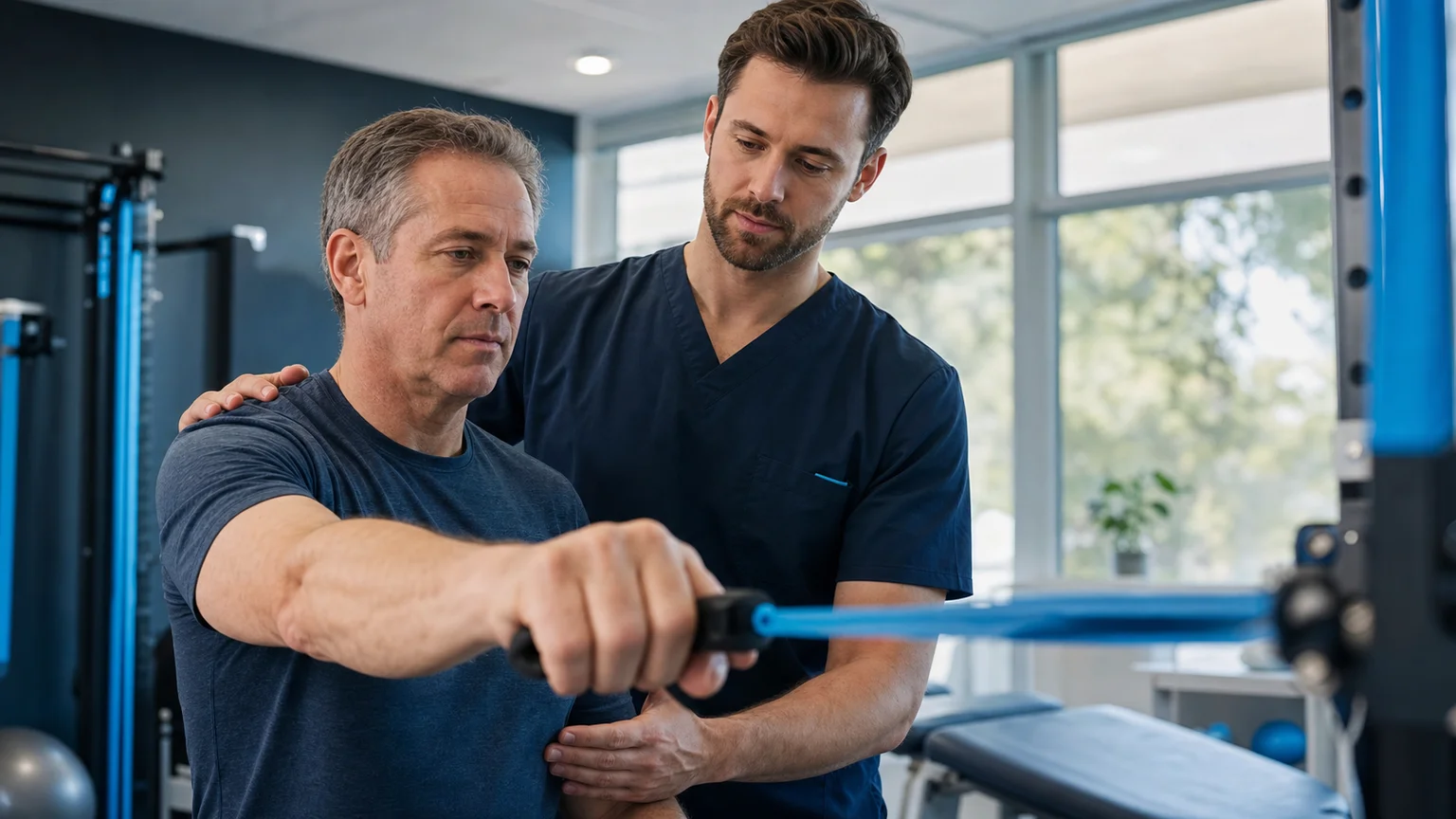
Rehabilitation center
Injury Rehabilitation
Physician-guided injury rehabilitation in Blue Springs and Kansas City. One coordinated team for shoulder, knee, hip and back injuries, with same-week appointments available.
Injury rehabilitation is a staged recovery program that rebuilds the strength, motion and stability lost after an injury, so the area stays protected and the injury does not return. It blends hands-on manual therapy with progressive exercise. At Core Medical Center, a physician-led team coordinates the full plan under one roof, from evaluation through return to activity.
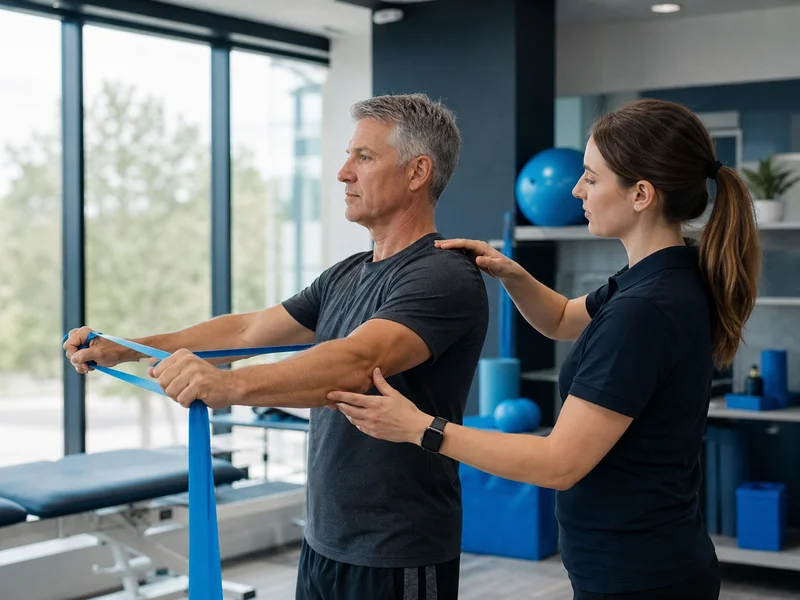
Injury Rehabilitation in Blue Springs and Kansas City
Recovering from an injury is rarely just about resting until the pain fades. Real recovery rebuilds the strength, motion and stability you lost, so the injury does not return. Core Medical Center provides physician-guided injury rehabilitation in Blue Springs, serving patients across the Greater Kansas City metro, with medical, therapy and rehabilitation teams working under one roof.
In short: injury rehabilitation is a structured, physician-overseen program that helps you move from pain and limited motion back to full function, using hands-on therapy and progressive exercise tailored to your specific injury.
What Injury Rehabilitation Is
Injury rehabilitation is a staged recovery plan, not a single treatment. After an injury, tissue heals but the surrounding muscles weaken, joints stiffen and movement patterns change to avoid pain. Left unaddressed, those changes lead to re-injury and lingering discomfort. Rehabilitation rebuilds the system around the injury so the area is strong, mobile and protected.
A typical program moves through clear stages:
- Calm and protect: reduce pain and inflammation while protecting healing tissue
- Restore motion: recover range of motion and normal joint mechanics
- Rebuild strength: progressive loading to restore strength and stability
- Return to activity: train the specific movements your work, sport or daily life requires
Who Injury Rehabilitation Helps
We work with patients recovering from sports injuries, falls, lifting and overuse injuries, car accidents and post-surgical recovery. If an injury has left you guarding a joint, losing strength or unable to return to the activity you care about, a structured plan gives that recovery direction.
This service connects directly to the conditions we treat most often, including shoulder pain, knee pain, hip pain, hand and wrist pain, foot and ankle pain and elbow pain. Your provider matches the plan to the injured area rather than running everyone through the same routine.
How It Works at Core Medical Center
Your first visit is an evaluation. A provider examines the injured area, reviews how it happened and what makes it worse, and sets measurable goals for motion, strength and function. From there, your plan blends the right tools for your injury.
- Hands-on manual therapy and joint mobilization
- Progressive therapeutic exercise and strengthening
- Physical therapy for guided, supervised recovery
- Chiropractic care when joint mechanics and spinal alignment are part of the picture
- A clear home program so progress continues between visits
Because our sports and athletic rehab and therapy teams share one building, your plan and your progress notes stay aligned. There is no chasing records between separate offices.
Conditions We Treat
Injury rehabilitation supports recovery across the body, including the shoulder, knee, hip, hand, wrist, foot, ankle and elbow, along with back and neck injuries that limit movement. Whether the injury is recent or one you have worked around for months, your provider will connect your diagnosis to the right mix of therapy, manual care and strengthening.
Why Core Medical Center
Your rehabilitation is led by a coordinated, physician-guided team rather than a single discipline working in isolation. Matt Elniff, PT, MPT, FAAOMPT, our lead physical therapist, directs hands-on recovery and progressive strengthening. When joint mechanics are involved, Dr. Devyn Chapman, DC, brings chiropractic care into the plan, and Carleigh Emanuel, OTD, OTR/L, adds occupational therapy for hand, wrist and daily-function recovery.
Our Blue Springs clinic sits minutes from Saint Luke’s East Hospital and Centerpoint Medical Center, so the same building that handles your evaluation handles your follow-up.
What to Expect
Expect a plan with a goal, not an open-ended schedule of visits. You will know what each stage is working toward, how progress is measured and what your home program asks of you. As you regain motion and strength, the plan advances with you toward a full return to work, sport or daily life.
Same-week appointments are typically available. When you are ready to start your recovery, book an appointment and our team will take it from there.
From our 4.9-star Google reviews
What Our Patients Say
Core medical has been a great place for my physical therapy. All the therapist are friendly, caring and compassionate. I would recommend core medical overall. Thanks Marybeth for all your help in my recovery.
Very nice place for physical therapy and rehab. Staff is always pleasant. Dr. Pat is a wonderful chiropractor and Ialways feel great after my adjustment. Dr. Aston is very knowledgeable and easy to relate to. I would definitely recommend this place.
I searched high and low for a facility that would accept my work injury insurance. Finally I found this hidden gem in Blue Springs. Fun, friendly staff that really care about your health, well-being and recovery. It's a LONG drive from my home, but well worth it!
Verbatim from our Google Business Profile.

Physician-led, under one roof
Ready to Start Care for Injury Rehabilitation?
Same-week appointments are typically available. Physician-led, integrated care in Blue Springs, serving the Greater Kansas City metro.
Book AppointmentCommon questions
Injury Rehabilitation FAQ
What is injury rehabilitation?
Injury rehabilitation is a guided recovery program that restores strength, range of motion and function after an injury, combining hands-on therapy, progressive exercise and physician oversight. At Core Medical Center in Blue Springs it is coordinated across one team so your plan stays connected from evaluation through return to activity.
How long does injury rehabilitation take?
Recovery time depends on the injury, its severity and how long it has been present, so your provider builds a timeline at your first visit and adjusts it as you progress. Many patients move through clear stages, from pain control and protected motion to strengthening and a return to full activity.
Do I need a referral to start injury rehabilitation?
Most patients can book an evaluation directly without a referral, and our front desk will confirm what your specific plan or claim requires when you schedule. If you are recovering from a work injury or accident, bring any related paperwork so we can coordinate your documentation.