

Condition
Hip Pain
Hip pain treatment in Blue Springs and across Kansas City. Physician-led evaluation, physical therapy, chiropractic and regenerative options under one roof, often same week.
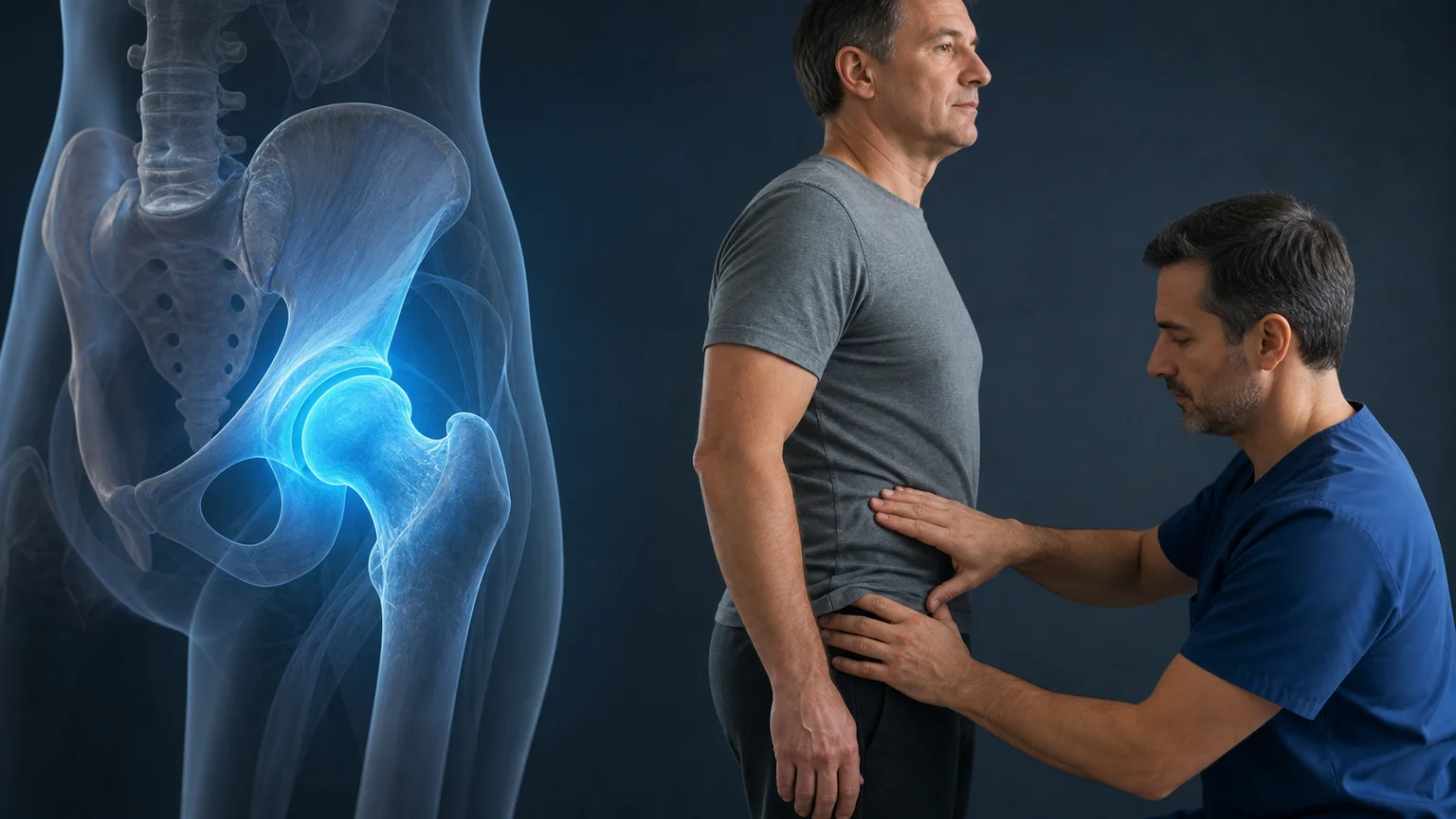
Hip pain is discomfort in or around the hip joint that can come from the joint itself, the surrounding muscles and tendons, or be referred from the low back. Causes range from arthritis and bursitis to labral tears and sciatica. Core Medical Center's physician-led team finds the real source, then treats it with non-surgical care under one roof.
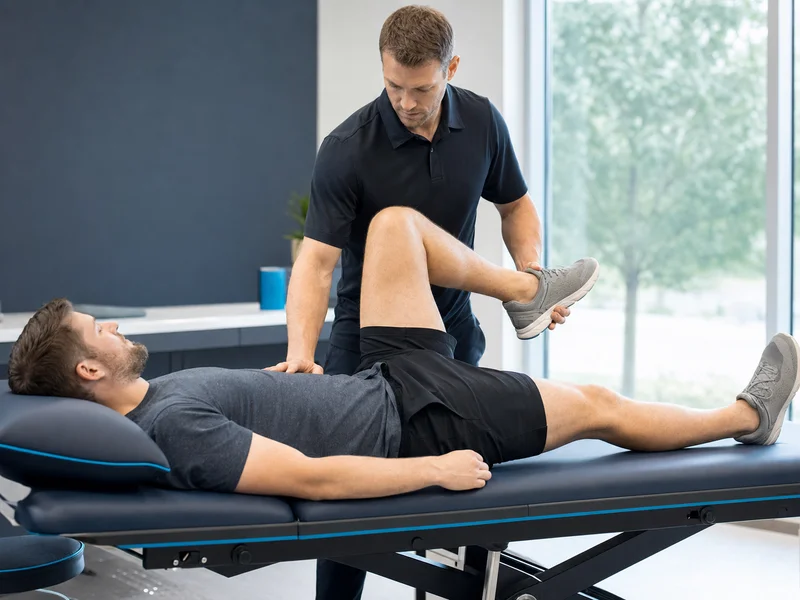
Hip pain is discomfort in or around the hip joint that can come from the joint itself, the surrounding muscles and tendons, or be referred from the low back. It can feel like a deep ache in the groin, a sharp catch when you move, or stiffness that limits how far you can walk. At Core Medical Center, our physician-led team in Blue Springs evaluates where your hip pain is actually coming from, then builds a plan that fits the cause.
In short: hip pain has many sources, from arthritis and bursitis to labral tears and referred low-back pain, and most of it improves with conservative, physician-directed care rather than surgery.
What Hip Pain Is
The hip is a deep ball-and-socket joint that carries your body weight and drives nearly every step you take. When the cartilage, tendons, bursae or surrounding muscles are irritated or worn, the result is pain that can sit in the groin, the outer hip or the buttock. Because the hip, the low back and the sciatic nerve all share the same region, hip pain is often tangled up with the spine, which is why a careful exam matters before any treatment begins.
Common Causes
Hip pain rarely has a single universal cause. The most common sources we see in Kansas City patients include:
- Hip osteoarthritis and age-related cartilage wear, the most frequent cause in adults over 50
- Bursitis or tendinitis from overuse, repetitive strain or a sudden change in activity
- Labral tears, impingement or sports and work-related injuries that strain the joint and soft tissue
- Referred pain from the low back, including sciatica and a herniated disc, which can send pain into the hip and buttock
Symptoms
Hip pain shows up differently depending on the cause, but the patterns we hear about most often are:
- Aching or sharp pain in the groin, outer hip or buttock
- Stiffness and reduced range of motion when walking, climbing stairs or rising from a chair
- Pain that worsens with activity or lingers after sitting for long periods
- Clicking, locking or a feeling of weakness and instability in the hip
If the pain travels down the leg or comes with numbness or tingling, the source may be your spine rather than the joint, and we will examine both.
Who It Helps
We see hip pain across a wide range of people: older adults managing arthritis, weekend athletes and runners with overuse injuries, workers whose jobs involve lifting or repetitive motion, and patients recovering from a fall or accident. Whether your pain is recent or has been building for years, the goal is the same, to find the cause and restore comfortable movement.
Treatment Options
Because Core Medical Center keeps medical care, therapy and rehabilitation under one roof, your hip-pain plan can pull from several disciplines without sending you across town. Depending on what your provider finds, your plan may draw on:
- Physical Therapy to rebuild strength, mobility and stability around the joint, led by physical therapist Matt Elniff
- Injury Rehabilitation for a structured return to activity after an accident, fall or overuse injury
- Chiropractic Care with Dr. Devyn Chapman when the low back and pelvis are contributing to your hip pain
- Regenerative Medicine with Dr. Paul Doskey, including PRP and prolotherapy options, for stubborn joint and soft-tissue pain
Most patients start with conservative care and adjust from there. Surgery is reserved for the cases that do not respond, and we will tell you plainly when a surgical opinion is worth getting.
When to Seek Care
Book an evaluation if your hip pain has lasted more than a couple of weeks, keeps you from walking or sleeping, or follows a fall or accident. Seek urgent care right away for severe pain after trauma, an inability to bear weight, or a hip that looks deformed.
For everyday hip pain that is wearing you down, you do not have to wait. Same-week appointments are typically available at our Blue Springs clinic, and we also care for patients in Overland Park and across the Greater Kansas City metro, minutes from Saint Luke’s East Hospital. When you are ready, book a visit and let our team find the cause and get you moving again.
Common Causes
- Hip osteoarthritis and age-related cartilage wear
- Bursitis or tendinitis from overuse and repetitive strain
- Labral tears, impingement or sports and work-related injuries
- Referred pain from the low back, sciatica or a herniated disc
Symptoms
- Aching or sharp pain in the groin, outer hip or buttock
- Stiffness and reduced range of motion when walking, climbing stairs or rising from a chair
- Pain that worsens with activity or lingers after sitting for long periods
- Clicking, locking or a feeling of weakness and instability in the hip
From our 4.9-star Google reviews
What Our Patients Say
Very friendly staff. Love coming here. Therapy department does amazing work. Get adjusted, hip injections, botox injections, therapy then home. Done wonders for me.
Great staff and my knee and hip are feeling much better can move around at work much better
After 6 months of pain on my shoulder and my hip I came too this amazing awesome place where the most kindful doctors and the staff helped me. They treated me very well and after 2 weeks of treatmeant and therapy my body had been improving . Then after I finished 2 months of therapy and treatmeant I felt like if nothing had ever happened to me . I want too say a big thank you too the staff and everybody else who had helped me, I thank you ALL so much for everything and everyone there who had helped me from this awesome place you guys are awesome and do an amazing professional job ! you do your job right! THANK YOU!!! :))
Verbatim from our Google Business Profile.

Physician-led, under one roof
Get an Evaluation for Hip Pain
Physician-directed, non-surgical care first. Same-week appointments are typically available across our Blue Springs and Overland Park locations.
Book AppointmentCommon questions
Hip Pain FAQ
Is my hip pain coming from my hip or my back?
It can be either, and the two often overlap. Pain felt in the groin or deep in the joint usually points to the hip itself, while pain across the buttock or down the leg can be referred from the low back or sciatic nerve, so our providers examine both before building a plan.
Do I need surgery for hip pain?
Most hip pain improves without surgery. We start with conservative, physician-directed care such as physical therapy, chiropractic and rehabilitation, and we add regenerative or injection options when appropriate, reserving surgical referral for cases that do not respond.
How soon can I be seen for hip pain in Blue Springs?
Same-week appointments are typically available at our Blue Springs clinic, and we also serve Overland Park and the Greater Kansas City metro. Bring any prior imaging if you have it so your provider can move quickly to a plan.