

Condition
Headaches & Migraines
Physician-led care for chronic headaches and migraines in Blue Springs and the Greater Kansas City metro. We find the cause and build a treatment plan, with same-week visits.
Headaches and migraines are recurring pain in the head, scalp or upper neck that can stem from the neck and spine, muscle tension, migraine triggers or past head and neck trauma. At Core Medical Center, a physician-led team in Blue Springs and Overland Park finds the actual cause first, then coordinates chiropractic, therapy and pain management in one plan.

Recurring headaches and migraines are rarely random. They usually trace back to a specific driver, and the right care starts by finding it. At Core Medical Center in Blue Springs, our physician-led team evaluates the head, neck and nervous system together so your plan targets the cause, not just the pain. We see patients with headaches and migraines from across the Greater Kansas City metro.
In short: chronic headaches and migraines are best managed by a physician-led team that identifies the cause (neck, muscle, migraine triggers or past trauma) and builds one coordinated treatment plan, which is exactly how we work.
What Headaches & Migraines Are
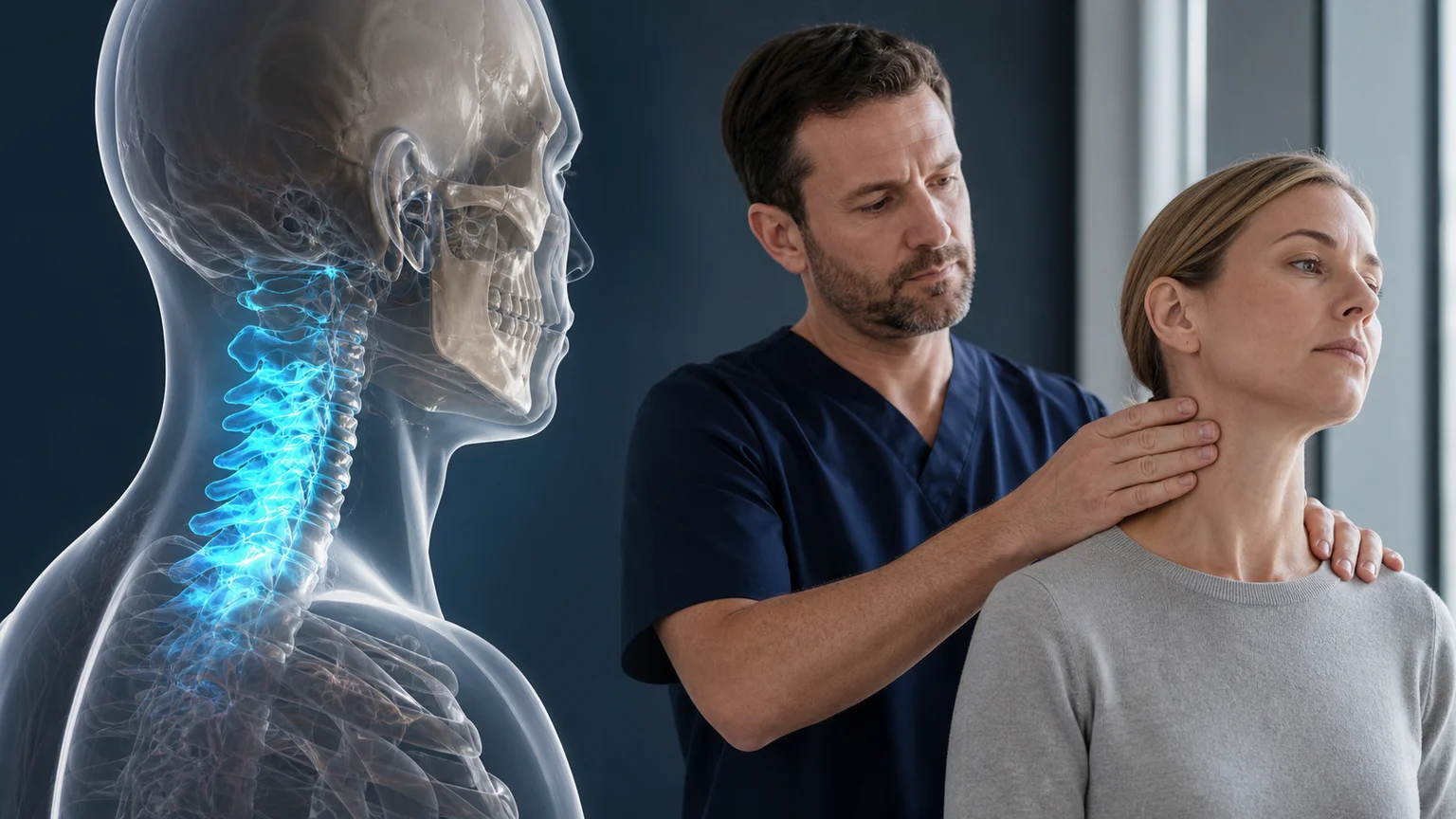
A headache is pain in the head, scalp or upper neck, and not every headache is the same. Tension-type headaches feel like a tight band of pressure. Migraines tend to be more intense, often one-sided and throbbing, and frequently come with nausea and sensitivity to light and sound. Many of the headaches we see in Blue Springs are cervicogenic, meaning the pain actually originates in the joints and muscles of the neck and refers up into the head. Sorting out which type you have is the first step toward relief.
Common Causes
Understanding the trigger is what makes treatment work. The most common causes we evaluate include:
- Neck and upper-spine joint dysfunction (cervicogenic headache), where restricted motion in the cervical spine refers pain into the head
- Muscle tension, poor posture and prolonged screen or desk work, which loads the neck and shoulders day after day
- Migraine triggers such as stress, sleep loss, hormonal shifts and certain foods or drinks
- Whiplash, concussion or other head and neck trauma, including injuries from auto accidents and falls
Because these causes overlap, we look at the whole picture rather than assuming every headache is a migraine.
Symptoms
Headache patterns are clues. The signs we ask about include:
- Throbbing or pressure pain on one or both sides of the head
- Light, sound or smell sensitivity, often paired with nausea
- Tight, aching pain spreading from the neck and the base of the skull
- Visual aura, dizziness or difficulty focusing before or during an attack
Tracking when your headaches happen, how long they last and what seems to set them off helps your provider connect the symptoms to the right cause and the right treatment.
Treatment Options
Once we know what is driving your headaches, we match you to the care that fits. Most plans draw from several of our connected services:
- Our Headache & Migraine Program coordinates evaluation, conservative care and ongoing management in one place
- Pain Management offers a physician-led path for frequent or stubborn migraines, led by Dr. Paul Doskey, MD, a board-certified anesthesiologist
- Chiropractic Care addresses the cervical-spine dysfunction behind tension-type and cervicogenic headaches
- Injection Procedures can target specific pain generators when conservative care needs reinforcement
Because every team shares one building in Blue Springs, your evaluation and your plan stay aligned instead of getting handed off and repeated. Headaches that follow an auto accident or a concussion are common reasons patients are referred between these services.
Why Core Medical Center
Headaches are easy to dismiss and hard to treat well, which is why a single-discipline approach often falls short. At Core Medical Center, a physician oversees care, and our chiropractic, therapy and pain-management teams collaborate on the same plan. That coordination matters most for migraines and post-traumatic headaches, where the cause can sit in more than one place at once. We are located in Blue Springs, minutes from Saint Luke’s East Hospital and Centerpoint Medical Center, and we serve patients throughout Kansas City.
When to Seek Care
Book an evaluation if your headaches are becoming more frequent, lasting longer, or interfering with work, sleep and daily life. Seek emergency care right away for a sudden, severe headache, or one accompanied by weakness, confusion, vision loss, a stiff neck or fever, since those can signal something more serious.
For headaches and migraines that keep coming back, you do not have to keep waiting them out. Same-week appointments are typically available. Book an appointment and let our team help you find the cause and a plan that actually works.
Common Causes
- Neck and upper-spine joint dysfunction (cervicogenic headache)
- Muscle tension, poor posture and prolonged screen or desk work
- Migraine triggers such as stress, sleep loss, hormones and certain foods
- Whiplash, concussion or other head and neck trauma
Symptoms
- Throbbing or pressure pain on one or both sides of the head
- Light, sound or smell sensitivity with nausea
- Tight, aching pain spreading from the neck and base of the skull
- Visual aura, dizziness or difficulty focusing before or during an attack
From our 4.9-star Google reviews
What Our Patients Say
Very friendly staff and professional. Would highly recommend to anyone. Had migraines for years and received botox, I no longer suffer from them.
A fantastic center with kind, knowledgeable, and helpful staff. If you’re in physical pain or have migraines I highly recommend you go here.
Love this place! No more migraines!!
Verbatim from our Google Business Profile.

Physician-led, under one roof
Get an Evaluation for Headaches & Migraines
Physician-directed, non-surgical care first. Same-week appointments are typically available across our Blue Springs and Overland Park locations.
Book AppointmentCommon questions
Headaches & Migraines FAQ
What kind of doctor treats chronic headaches and migraines?
A physician-led team is ideal, because headaches have many causes. At Core Medical Center, board-certified pain physician Dr. Paul Doskey works alongside our chiropractic and therapy teams in Blue Springs to find the source and build one coordinated plan for patients across the Greater Kansas City metro.
Can chiropractic care help with headaches?
Yes, when the headache is driven by the neck and upper spine. Cervicogenic and tension-type headaches often respond to chiropractic care and targeted therapy, which is why we evaluate the neck as part of every headache visit rather than treating pain in isolation.
When should I see a doctor for a headache?
See a provider for headaches that are frequent, worsening, or interfering with work and sleep, and seek emergency care for a sudden severe headache, one with weakness, confusion, vision loss or fever. For ongoing or recurring headaches, same-week appointments are typically available.